
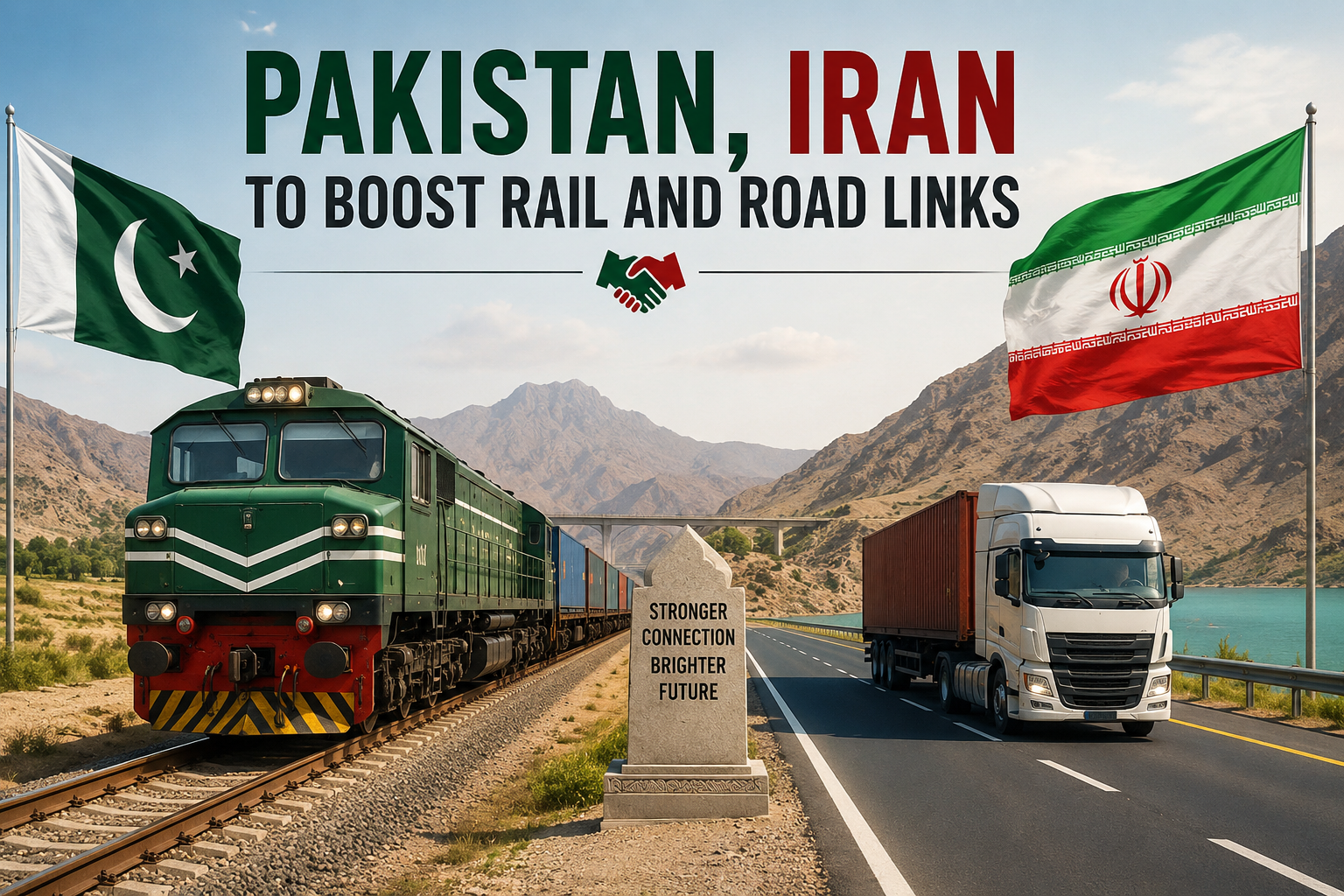
Islamabad, June, 2026 Pakistan and Iran have decided to work together to make cross-border trade easier. Officials from both countries met this week and agreed to improve rail and road connections that have been slow and unreliable for years.
The talks were not about big policy speeches. They were about practical stuff that traders complain about every day: long waits at border gates, broken stretches of road, and no proper freight train service.
What’s actually going to change
Right now, a truck carrying goods from Quetta to the Iranian border can lose hours, sometimes a whole day, just sitting in line for customs. Roads in parts of Balochistan are rough, and paperwork delays add more time. On the rail side, there isn’t a regular freight option that exporters can count on.
Both sides said they’ll look at upgrading key road sections, speeding up customs checks, and studying a rail freight link that can run on a fixed schedule. The goal is to cut transport time and costs so Pakistani businesses can plan better.
Why this matters for trade
ran is right next door, but trade volume is still low compared to the potential. Earlier this year a rice export deal collapsed, and officials pointed to banking issues and logistics delays as part of the problem.
If the border moves faster, exporters think it will help with items like rice, textiles, cement, and fruit. For small and mid-size firms in Balochistan and Sindh, a shorter, cheaper route to Iran could open new buyers without relying only on ports.
People living near the border also see a benefit. More trade usually means more work at warehouses, transport yards, and customs offices. It’s not going to transform the economy overnight, but it’s the kind of change that adds up.
The challenges ahead
No one is pretending this will be easy. Money is one issue. Upgrading roads and rail takes funding, and both governments have other budget pressures. Then there’s customs reform. Faster clearance needs better coordination, staff training, and less paperwork.
Security is another concern. The border area has seen incidents in the past, so any plan will have to address safety for drivers and cargo. And the banking side still needs a fix, because payment problems have killed deals before.
Final Thought
This is one of those agreements that could go either way. If it stays a press release, nothing changes and traders keep dealing with the same delays. But if both Islamabad and Tehran put real money and staff behind it, it could be useful.
For now, exporters are cautiously hopeful. They’ve heard promises before. What they want to see are bulldozers on the roads, fewer forms at the border, and a freight train that actually shows up on time. If that happens in the next few months, this will turn out to be more than just talk.