
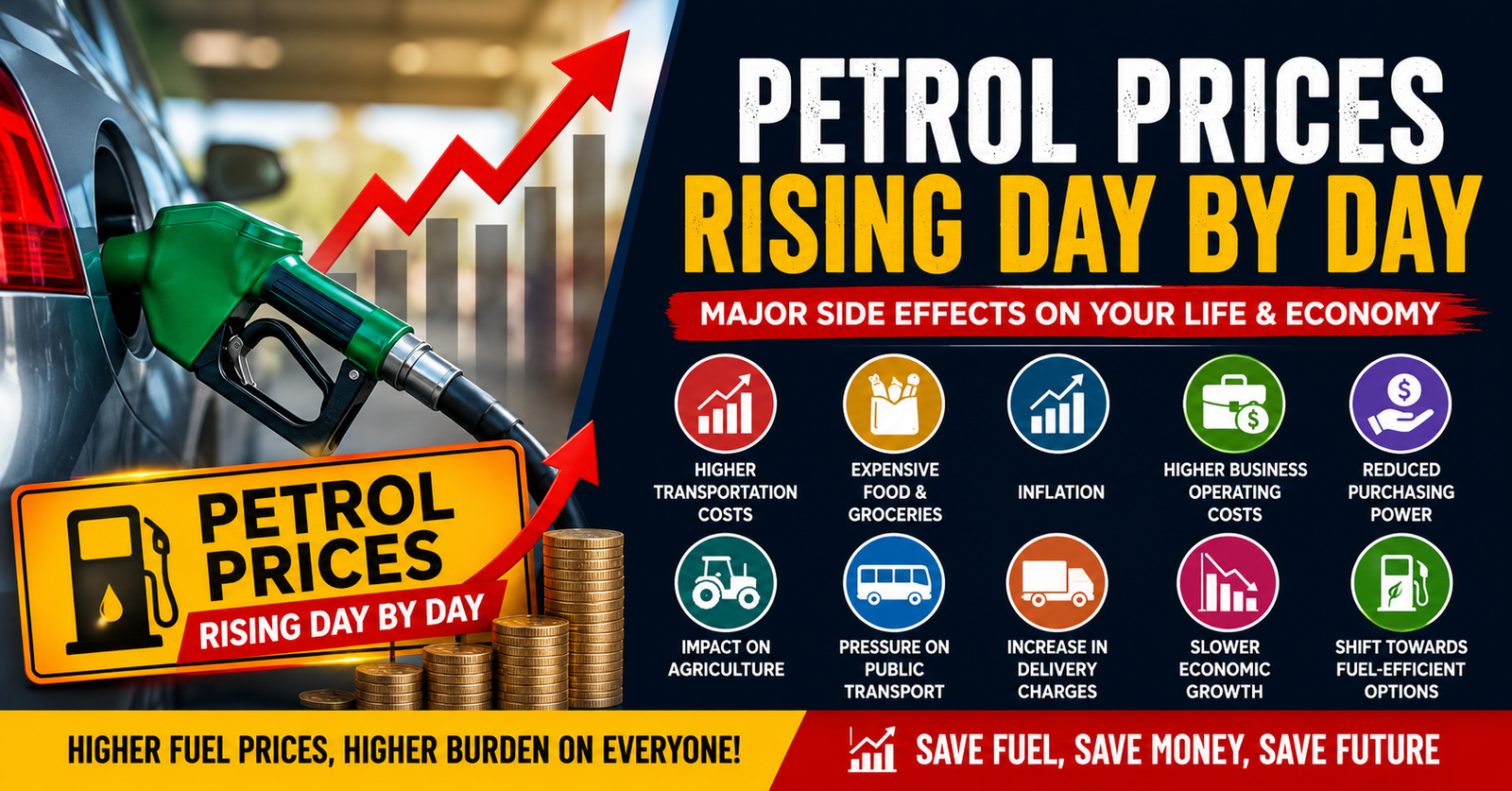
Petrol Prices Rising in Pakistan
Petrol prices in Pakistan continue to rise, creating financial pressure on millions of households and businesses. Every increase in fuel prices directly impacts transportation, food costs, industrial production, and the overall economy. Since petrol is essential for daily commuting, logistics, and commercial activities, even a small increase can trigger price hikes across multiple sectors.
In 2026, continuous fuel price adjustments remain one of the biggest economic concerns for consumers. Rising petrol prices not only increase travel expenses but also contribute to inflation, making everyday essentials more expensive.Petrol Prices Rising in Pakistan.
Why Are Petrol Prices Increasing?
Several factors influence petrol prices in Pakistan, including:
- Changes in global crude oil prices.
- Fluctuations in the US dollar exchange rate.
- Government taxes and petroleum levy.
- Import and transportation costs.
- International market demand and supply.
Because Pakistan imports a significant portion of its petroleum products, international market changes have a direct impact on local fuel prices.Petrol Prices Rising in Pakistan.
Major Side Effects of Rising Petrol Prices
1. Increase in Transportation Costs
The first and most immediate effect of higher petrol prices is the increase in transportation expenses. Public buses, taxis, ride-hailing services, and freight companies often raise fares to cover higher fuel costs.
As transportation becomes more expensive, consumers end up paying more for both travel and delivered goods.
2. Higher Food Prices
Almost every food item requires transportation before reaching markets. When fuel prices rise, transporting vegetables, fruits, dairy products, meat, and grocery items becomes more expensive.
Retailers often pass these additional costs on to customers, resulting in higher food prices.
3. Rising Inflation
Petrol is closely linked with inflation. Higher fuel costs increase production, manufacturing, and distribution expenses across many industries.
As businesses face higher operating costs, prices of goods and services increase, reducing consumers’ purchasing power.
4. Increased Cost of Living
Families must spend a larger portion of their monthly income on fuel and transportation. This leaves less money available for:
- Education
- Healthcare
- Utilities
- Savings
- Household expenses
Low- and middle-income families are usually affected the most.
5. Higher Business Operating Costs
Businesses rely heavily on transportation and logistics. Rising petrol prices increase expenses for:
- Product delivery
- Employee transportation
- Manufacturing
- Supply chain operations
- Distribution networks
Many companies respond by increasing product prices or reducing operational costs.
6. Impact on Farmers
The agricultural sector also suffers when fuel prices rise. Farmers use diesel and petrol for:
- Tractors
- Water pumps
- Harvesting equipment
- Transporting crops
Higher fuel costs increase farming expenses, which can eventually lead to higher food prices nationwide.
7. Increase in Public Transport Fares
Public transport operators often increase fares after fuel price hikes. Daily commuters, students, and office workers face higher travel expenses, making transportation less affordable.
8. Higher Delivery Charges
Online shopping and courier services depend on fuel for deliveries. As petrol prices increase, delivery companies often revise their service charges, making e-commerce purchases more expensive.
9. Reduced Consumer Spending
When people spend more money on fuel and essential items, they reduce spending on non-essential products such as electronics, clothing, entertainment, and travel.
Lower consumer spending can negatively affect retail businesses and overall economic growth.
10. Pressure on Small Businesses
Small businesses usually operate with limited budgets. Rising fuel prices increase transportation and operational costs, making it difficult for many small enterprises to maintain profitability.
Some businesses may reduce staff, increase prices, or cut services to manage expenses.
How Petrol Price Increases Affect the Economy
Continuous increases in fuel prices can slow economic activity by:
- Increasing inflation.
- Reducing consumer purchasing power.
- Raising production costs.
- Lowering business profitability.
- Increasing unemployment risks.
- Slowing investment.
Economists often consider fuel prices one of the key indicators affecting economic stability.
How Can People Reduce the Impact?
Although consumers cannot control fuel prices, they can reduce their expenses by:
- Using public transportation whenever possible.
- Carpooling with colleagues or friends.
- Maintaining vehicles regularly for better fuel efficiency.
- Planning trips to avoid unnecessary driving.
- Choosing fuel-efficient or hybrid vehicles when possible.
These simple habits can help lower monthly fuel expenses.
Future Outlook
Fuel prices are expected to continue changing based on global oil markets, exchange rates, and government taxation policies. Consumers and businesses should stay informed about official fuel price announcements and plan their budgets accordingly.
If international oil prices decline or the local currency strengthens, petrol prices may stabilize. However, any rise in global crude oil prices could lead to further increases in domestic fuel rate.Petrol Prices Rising in Pakistan.