
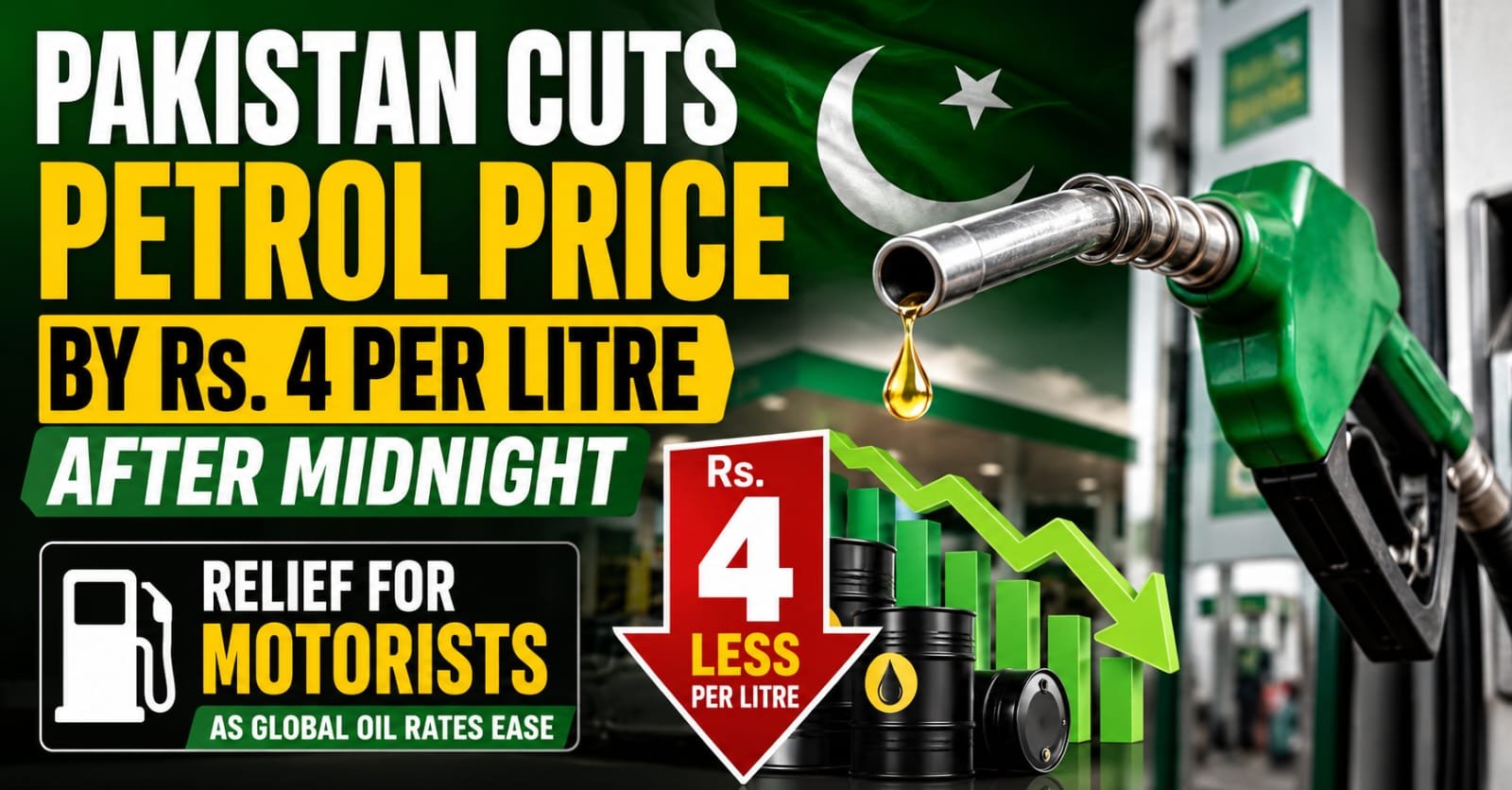
Islamabad, June 5, 2026 — 12:05 AM — In a late-night move that brought some relief to millions of motorists, the federal government of Pakistan reduced the price of petrol by Rs. 4 per litre with effect from 12:00 AM today. The new price of Motor Spirit, or MS petrol, has been fixed at Rs. 377.78 per litre, down from the previous rate of Rs. 381.78 per litre that was announced on May 30, 2026.
The notification was issued by the Ministry of Finance after Prime Minister Shehbaz Sharif approved the revision based on recommendations from the Oil and Gas Regulatory Authority, OGRA. According to the statement, the reduction was made possible due to a slight dip in international oil prices and a decrease in import premiums during the last fortnight.
For people who spend a large part of their income on fuel, even a Rs. 4 cut matters. A bike rider filling a 10-litre tank will now save Rs. 40. A car owner with a 40-litre tank will save Rs. 160. It is not a huge amount, but in a country where inflation has been squeezing household budgets for years, any reduction at the pump is welcome news.
How the New Price Was Decided
Petrol prices in Pakistan are reviewed every 15 days. The last revision took place on May 30, 2026, when the government cut petrol by Rs. 22 per litre as an Eid-ul-Adha relief. That brought the price down to Rs. 381.78 per litre. Before that, prices had seen a sharp increase in early April, which was heavily criticized by rights groups and the public.
This time, OGRA calculated the consumer price based on the average Platts Singapore benchmark over the past two weeks. International crude oil rates showed a mild decline, around $2 per barrel for petrol. Import premiums also dropped slightly. The Pakistan State Oil, PSO, and other marketing companies provided their freight and handling data. After adding the petroleum development levy, PDL, sales tax, and dealer margins, the final consumer price came to Rs. 377.78.
The government kept the petroleum development levy unchanged. Officials said there was no room to reduce the levy further because the government needs revenue to meet IMF targets. But since the international component became cheaper, the benefit was passed on directly to consumers.
The Timing and Public Reaction
The decision was announced just before midnight and took effect at 12:00 AM. That is why people waking up on June 5 saw the new rate on digital boards at petrol stations. Social media was quick to react. On X, formerly Twitter, hashtags like PetrolPrice and Relief started trending within an hour.
Many users posted photos of petrol pumps updating their rates. A user from Lahore wrote, “Finally some good news. Rs. 4 is not much but at least it is going down, not up.” A rider from Karachi posted, “Filled my bike today morning. Saved 40 rupees. Chaye pee loon ga us se.”
Not everyone was satisfied. Some people argued that Rs. 4 is too small compared to the Rs. 137 increase seen in April. Human rights groups also repeated their earlier concerns that fuel prices are still at historically high levels. They said the government should focus on reducing taxes and levies instead of relying only on international market swings.
But for the average person, the mood was cautiously optimistic. Transporters said the cut will help a little with operational costs. Rickshaw drivers, who fill petrol twice a day, said they will save around Rs. 80 daily. That can cover one meal.
What This Means for Transport and Inflation
Fuel prices affect everything in Pakistan. When petrol goes up, bus fares go up. When petrol comes down, people hope that transport costs will also ease. The Pakistan Goods Transporters Alliance said the Rs. 4 cut will reduce the per-kilometre cost for trucks by a small margin. They are still asking the government to cut diesel prices more, because diesel is what most heavy vehicles use.
High-Speed Diesel, HSD, rates were not changed in this notification. HSD remains at Rs. 380.78 per litre. The government said diesel prices were already adjusted on May 30 and the international diesel market did not show enough movement to justify another cut right now. Kerosene and Light Diesel Oil rates were also kept unchanged.
Economists say a Rs. 4 petrol cut will have a minor impact on overall inflation. The Consumer Price Index, CPI, is driven by food, housing, and energy costs. Fuel is a part of that, but the weight is limited. However, the psychological effect is important. When people see prices falling at the pump, they feel some pressure easing. That confidence matters for spending and business decisions.
A Look at the Bigger Picture
Pakistan imports almost 80 percent of its oil. That means local prices are tied directly to global markets and the US dollar exchange rate. When crude oil goes up in the international market, Pakistan feels the pain within days. When the rupee weakens against the dollar, the impact is even bigger.
The government has been trying to balance two things. One is keeping prices affordable for the public. The other is meeting fiscal targets agreed with the International Monetary Fund. The IMF program requires Pakistan to maintain the petroleum development levy to generate revenue. That is why even when international prices fall, the local price does not drop as much as people expect.
In April 2026, petrol reached Rs. 458.41 per litre after a 43 percent hike. That caused protests and criticism from the Human Rights Council of Pakistan. The council said such steep increases hurt the right to a dignified standard of living. Since then, the government has been cautious. The May 30 Eid cut and today’s Rs. 4 reduction are both attempts to show that the state is sharing the benefit when global prices ease.
Regional Comparison
Compared to neighboring countries, Pakistan’s petrol price is still on the higher side. In India, petrol in Delhi is around 94 rupees per litre, which is roughly Rs. 312 Pakistani rupees. In Bangladesh, the price is close to 130 Bangladeshi taka, or about Rs. 340 Pakistani rupees. But those countries have different tax structures and subsidies.
Iran and Gulf countries have much lower prices due to local oil production. Pakistan does not have that advantage. It has to import crude, refine it, and then add taxes. That is why the price at the pump is always higher than the international crude rate.
The View from Petrol Pumps
I spoke to a few pump attendants early this morning in Rawalpindi. One of them, Nadeem, said the first customer after midnight was a taxi driver who had been waiting at the station. “He said, ‘Bhai rate gir gaya hai? Chalo shukar hai.’ He filled 500 rupees worth and said he will now do one extra ride.”
Another attendant in Lahore said people were asking if this is the start of a downward trend. “We don’t know,” he said. “If international prices keep falling, maybe next fortnight there will be another cut. If they go up, the government will increase again.”
That uncertainty is part of life now. Every 15 days, people check the news at night to see if they need to fill their tanks before midnight or wait until morning.
Government’s Message
The Prime Minister’s Office said the decision reflects the government’s commitment to passing relief to the public whenever financial space is available. The statement quoted the Prime Minister saying that the government understands the burden on citizens and will continue to monitor global prices closely.
Officials also reminded people that Pakistan has limited fiscal space. Subsidies cannot be given for long periods. The best way to keep prices stable is to improve local refining, reduce losses, and increase domestic oil and gas production. Projects like new refineries and exploration in Balochistan and Khyber Pakhtunkhwa are part of that long-term plan.
What Drivers Should Expect Next
The next price review will be around June 15, 2026. If international crude stays below $85 per barrel and the rupee remains stable, there could be another small cut. If tensions in the Middle East push oil above $90, then an increase is likely.
For now, drivers should plan based on Rs. 377.78 per litre. Bike owners can expect to save a few hundred rupees per month. Car owners will see a bigger difference over time. Fleet operators and delivery services will also benefit, though the margin is small.
People in northern areas like Gilgit and Chitral should note that the price at their local pump might be Rs. 1 to Rs. 2 higher due to freight charges. The base rate is Rs. 377.78, but transport cost to remote areas adds a little extra.
Final Thought
A Rs. 4 cut is not going to change anyone’s life overnight. It will not bring back the days of Rs. 150 petrol. But it is a step in the right direction, and steps matter when you are climbing a steep hill.
For a country like Pakistan, fuel price is not just about cars and bikes. It is about food prices, bus fares, school vans, and the cost of running a small shop. Every rupee saved at the pump means a rupee that can be spent somewhere else. Maybe on a child’s school book. Maybe on medicine. Maybe just on a cup of tea without worrying.
The real test will be what happens in the next few months. If global oil prices stay calm and the government keeps passing the benefit down, people will feel real relief. If prices jump again, then this Rs. 4 cut will be forgotten quickly.
So for today, let us take the win. Fill the tank, save a few rupees, and hope that the next notification also brings good news. Because in Pakistan, even small relief at the pump feels big when you are living through inflation every single day.