
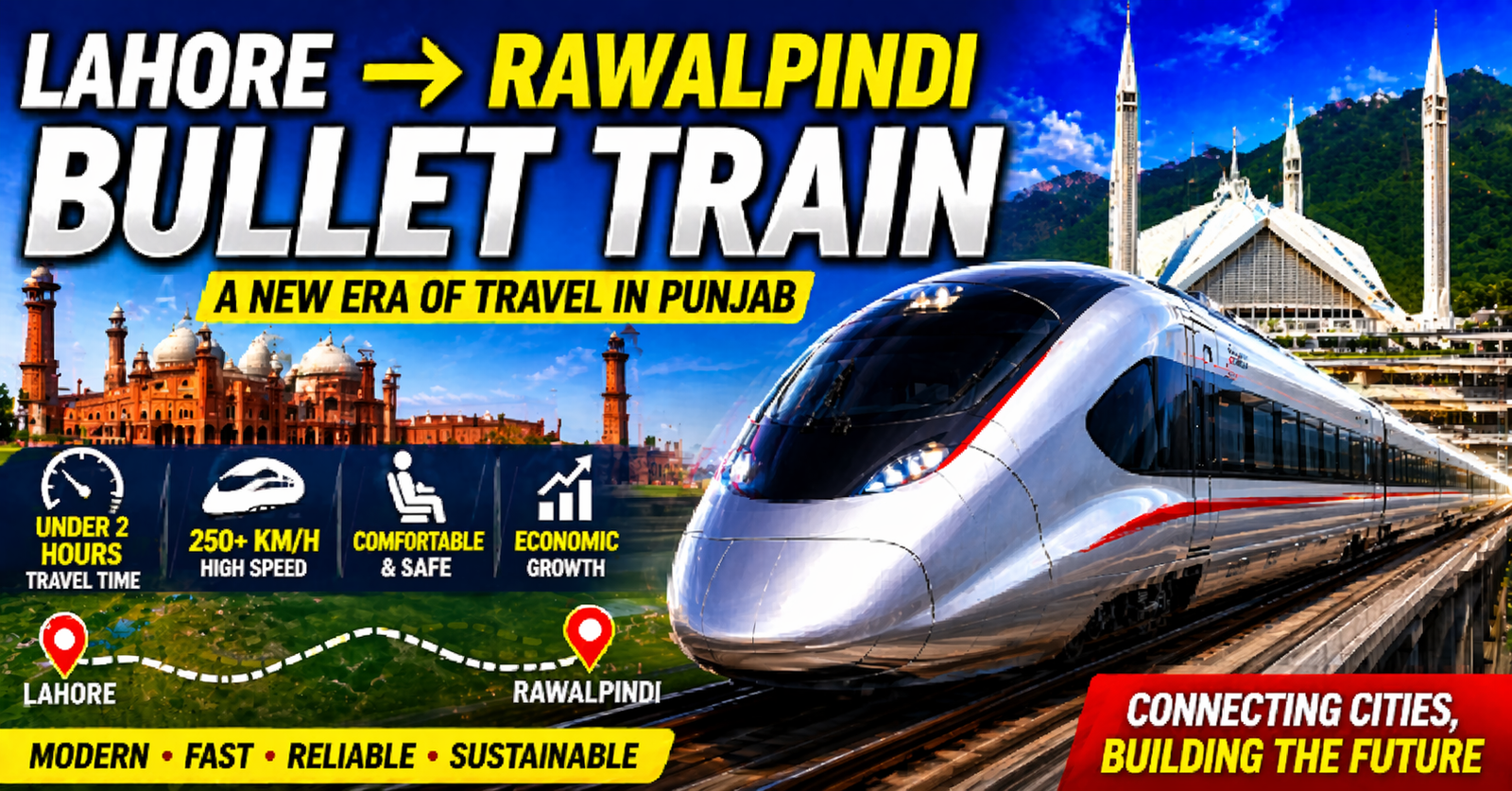
The idea of a high-speed bullet train between Lahore and Rawalpindi is quickly gaining attention as one of the most ambitious infrastructure projects proposed by the Punjab government. If implemented, this project could transform not only travel between the two major cities but also the overall economic landscape of the province.
A Vision for High-Speed Connectivity
Lahore and Rawalpindi are among the most important urban centers in Punjab. Currently, travel between these cities can take anywhere from 4 to 6 hours by road, depending on traffic and conditions. Even train journeys, while relatively comfortable, are not significantly faster.
The proposed bullet train aims to reduce this travel time to around 2 hours or less, bringing Pakistan closer to the kind of modern transport systems seen in countries like China, Japan, and Turkey.
This is not just about speed—it’s about redefining how people move, work, and connect.
Key Features of the Proposed Project
While the project is still in the planning and feasibility stage, several potential features are being discussed:
- High-speed rail technology capable of speeds exceeding 250 km/h
- Dedicated railway track separate from existing rail infrastructure
- Modern, world-class train stations in Lahore and Rawalpindi
- Enhanced passenger comfort, safety, and punctuality
- Integration with existing urban transport systems
If executed properly, this project could become Pakistan’s first true high-speed rail corridor.
Economic and Social Impact
The Lahore–Rawalpindi bullet train could bring significant economic benefits:
1. Boost to Business & Trade
Faster travel means professionals can attend meetings in another city and return the same day. This could strengthen business ties between central and northern Punjab.
2. Job Creation
From construction to operations, the project is expected to generate thousands of jobs, including engineers, technicians, and service staff.
3. Urban Development
New stations and rail corridors often lead to commercial and residential development in surrounding areas, increasing land value and investment opportunities.
4. Tourism Growth
With reduced travel time, tourists will find it easier to explore historical sites in both cities, boosting the local tourism industry.
Challenges Ahead
Despite its promise, the bullet train project faces several challenges:
- High cost: Such projects require billions of dollars in investment
- Technical expertise: Pakistan may need foreign partnerships for advanced rail technology
- Land acquisition issues
- Long implementation timeline
These factors mean the project may take years before becoming a reality.
Government Strategy and Future Outlook
The Punjab government has shown interest in modernizing transport infrastructure, including electric buses and urban transit systems. The bullet train concept fits into a broader vision of smart, efficient, and sustainable mobility.
However, at this stage, the project remains a concept under feasibility study, and no final timeline has been confirmed.
Conclusion
The Lahore to Rawalpindi bullet train represents a bold step toward modernization. While challenges remain, the potential benefits—faster travel, economic growth, and improved connectivity—make it an exciting prospect for the future.
If successfully implemented, this project could mark the beginning of a new era in Pakistan’s transportation system, bringing the country closer to global standards.