
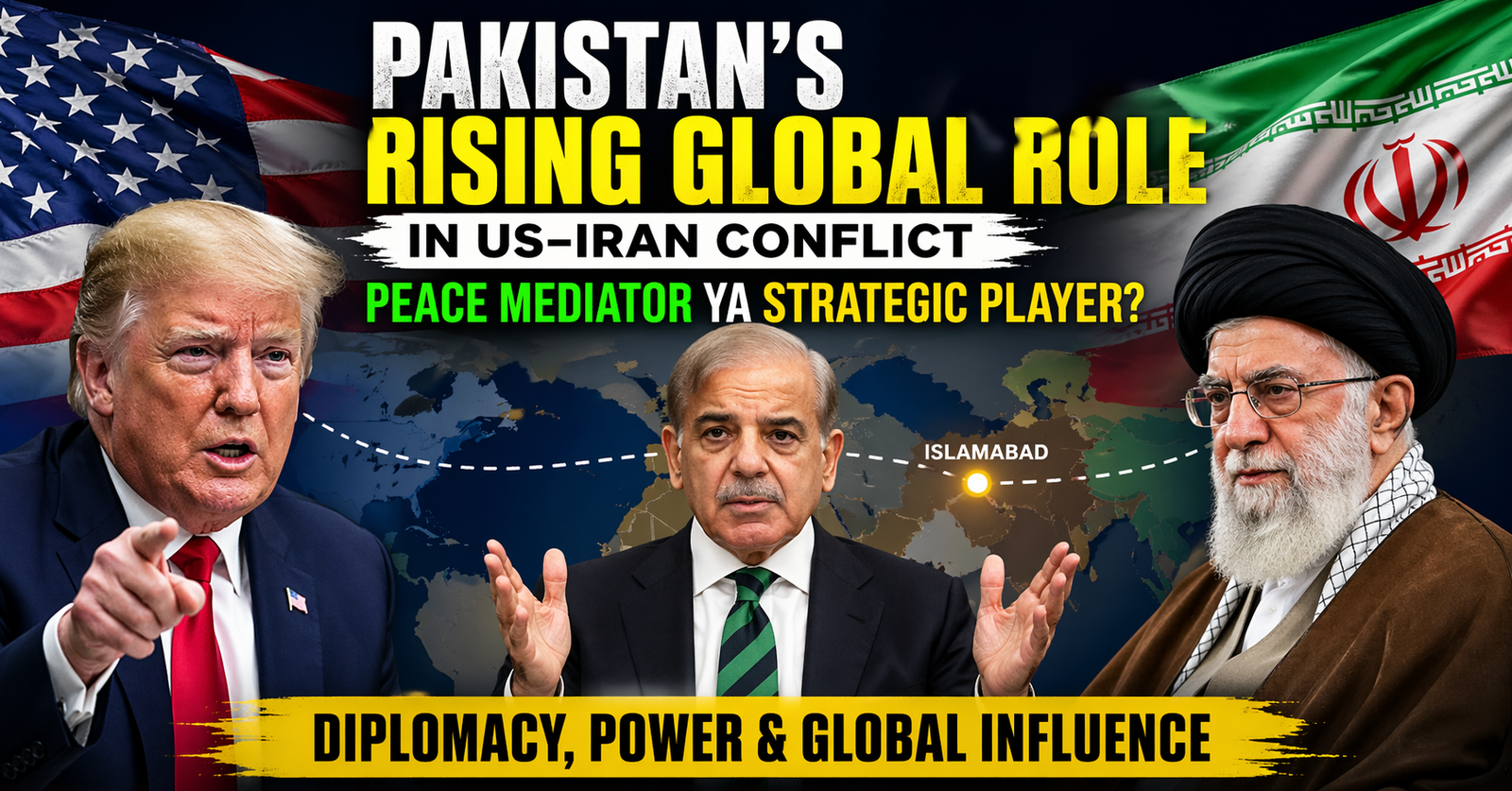
In April 2026, something unusual happened in global diplomacy: Pakistan, often seen as a regional player, suddenly found itself at the center of one of the world’s most dangerous conflicts — the United States and Iran confrontation.
From hosting high-stakes negotiations in Islamabad to proposing ceasefire frameworks, Pakistan is no longer just observing global politics — it is actively shaping it. But the key question remains:
Is Pakistan genuinely acting as a peace mediator, or is it strategically positioning itself for global influence?
The Islamabad Talks: A Turning Point
The most defining moment came when Pakistan hosted direct US–Iran peace talks in Islamabad in April 2026 — the first such high-level face-to-face engagement in decades.
These talks aimed to:
- End the ongoing Iran war
- Reopen the critical Strait of Hormuz
- Prevent a wider Middle East escalation
Although the negotiations lasted over 20 hours, they ended without a final agreement, mainly due to disagreements over sanctions and Iran’s nuclear program.
Still, the bigger story wasn’t the failure — it was Pakistan’s emergence as the host and facilitator.
Pakistan as a Peace Mediator
Pakistan’s leadership has actively pushed diplomacy:
- It offered Islamabad as a neutral ground for talks
- Facilitated direct communication between US and Iranian officials
- Proposed multi-phase ceasefire plans
- Coordinated with global players like China to support negotiations
Recent reports even suggest that Pakistan is working to organize another round of talks and extend ceasefire efforts, showing continued commitment to de-escalation.
Pakistan’s strategy relies on a unique advantage:
- It has working relations with both Iran and the US
- It is the only nuclear Muslim-majority country
- It maintains ties with Gulf states and China simultaneously
This gives Islamabad credibility as a bridge between opposing sides.
Strategic Interests Behind the Diplomacy
However, diplomacy is rarely neutral.
Pakistan’s involvement is also driven by clear strategic motivations:
1. Global Image Building
Pakistan wants to reposition itself from a security-focused state to a diplomatic power.
Acting as a mediator enhances its global credibility and soft power.
2. Economic Benefits
A successful mediation role could:
- Attract foreign investment
- Improve relations with Western countries
- Strengthen its position in IMF and financial negotiations
3. Regional Stability
The Iran conflict directly impacts:
- Energy routes (especially the Strait of Hormuz)
- Pakistan’s border security
- Trade and economic stability
So peace is not just ideal — it’s necessary for Pakistan’s own survival.
Challenges and Limitations
Despite its rising role, Pakistan faces serious challenges:
Lack of Full Trust
- Iran has shown hesitation and distrust toward Pakistan’s military leadership
- The US still prioritizes its own strategic interests over third-party mediation
Fragile Negotiations
- Talks collapsed once and remain uncertain
- Iran’s internal politics and hardliners complicate peace efforts
External Pressure
- The US naval blockade of Iran has escalated tensions further
- Any misstep could damage Pakistan’s neutrality
Mediator or Strategic Player?
The answer lies somewhere in between.
Pakistan is genuinely trying to mediate peace
BUT
It is also carefully leveraging this role to expand its global influence
This dual approach is not unusual — in fact, it is how modern diplomacy works.
Even countries like China are simultaneously:
- Promoting peace
- Expanding geopolitical influence
Pakistan is now following a similar path.
What Lies Ahead?
The coming weeks will be crucial:
- A second round of US–Iran talks may take place in Pakistan
- Islamabad could emerge as a permanent diplomatic hub for conflict resolution
- Or, if talks fail again, its credibility could suffer
Either way, one thing is clear:
Pakistan is no longer on the sidelines of global politics.
Conclusion
Pakistan’s role in the US–Iran conflict marks a significant shift in its foreign policy identity. From a country often associated with internal challenges, it is now attempting to become a global peace broker.
Whether this effort leads to lasting peace or simply strengthens Pakistan’s strategic position, the outcome will shape not only the Middle East but also Pakistan’s future on the world stage.