
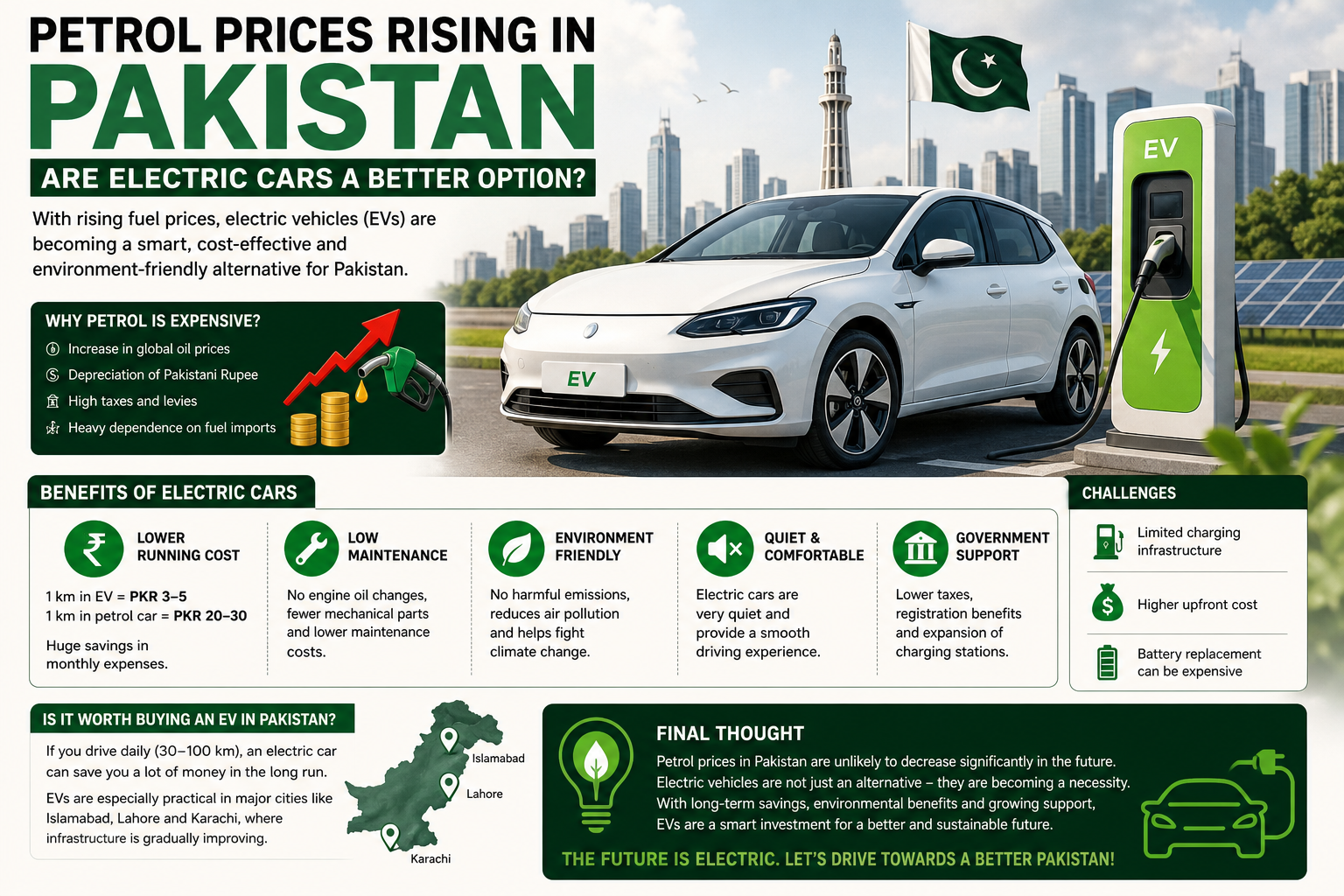
In recent years, petrol and diesel prices in Pakistan have increased significantly. For the average person, owning and driving a car is becoming more expensive day by day. In this situation, electric vehicles (EVs) are emerging as a cost-effective and eco-friendly alternative.
Why Are Petrol Prices Increasing
There are several key reasons behind rising fuel prices in Pakistan:
- Increase in global oil prices
- Depreciation of the Pakistani Rupee
- Government taxes and levies
- Heavy dependence on fuel imports
All these factors directly impact the daily expenses of consumers.
What Is an Electric Car
An electric car is a vehicle that runs on electricity instead of petrol or diesel. It uses a rechargeable battery, which can be charged at home or at charging stations.
Benefits of Electric Cars
1. Lower Running Cost
Electric vehicles are much cheaper to run compared to petrol cars. For example:
- 1 km in EV = around PKR 3–5
- 1 km in petrol car = around PKR 20–30
This makes a huge difference in monthly fuel expenses.
2. Low Maintenance
EVs have fewer moving parts compared to traditional cars:
- No engine oil changes
- Fewer mechanical issues
- Lower maintenance costs
3. Environment Friendly
- No harmful emissions
- Reduces air pollution
- Helps fight climate change
4. Quiet and Comfortable
Electric cars are very quiet and provide a smooth driving experience, making them more comfortable for daily use.
5. Government Support
The Government of Pakistan is encouraging EV adoption through:
- Lower taxes
- Registration benefits
- Expansion of charging infrastructure
Challenges of Electric Cars
Despite the benefits, there are some challenges:
- Limited charging stations
- Higher upfront cost
- Battery replacement can be expensive
Is It Worth Buying an EV in Pakistan
If you drive daily (around 30–100 km), an electric car can save you a lot of money in the long run.
EVs are especially practical in major cities like Islamabad, Lahore, and Karachi, where infrastructure is gradually improving.
Final Thought
Petrol prices in Pakistan are unlikely to decrease significantly in the future, and dependency on fuel imports will continue to put pressure on the economy. In this changing landscape, electric vehicles are not just an alternative—they are becoming a necessity.
While EVs still face some challenges, their long-term savings, environmental benefits, and growing government support make them a smart investment for the future.