
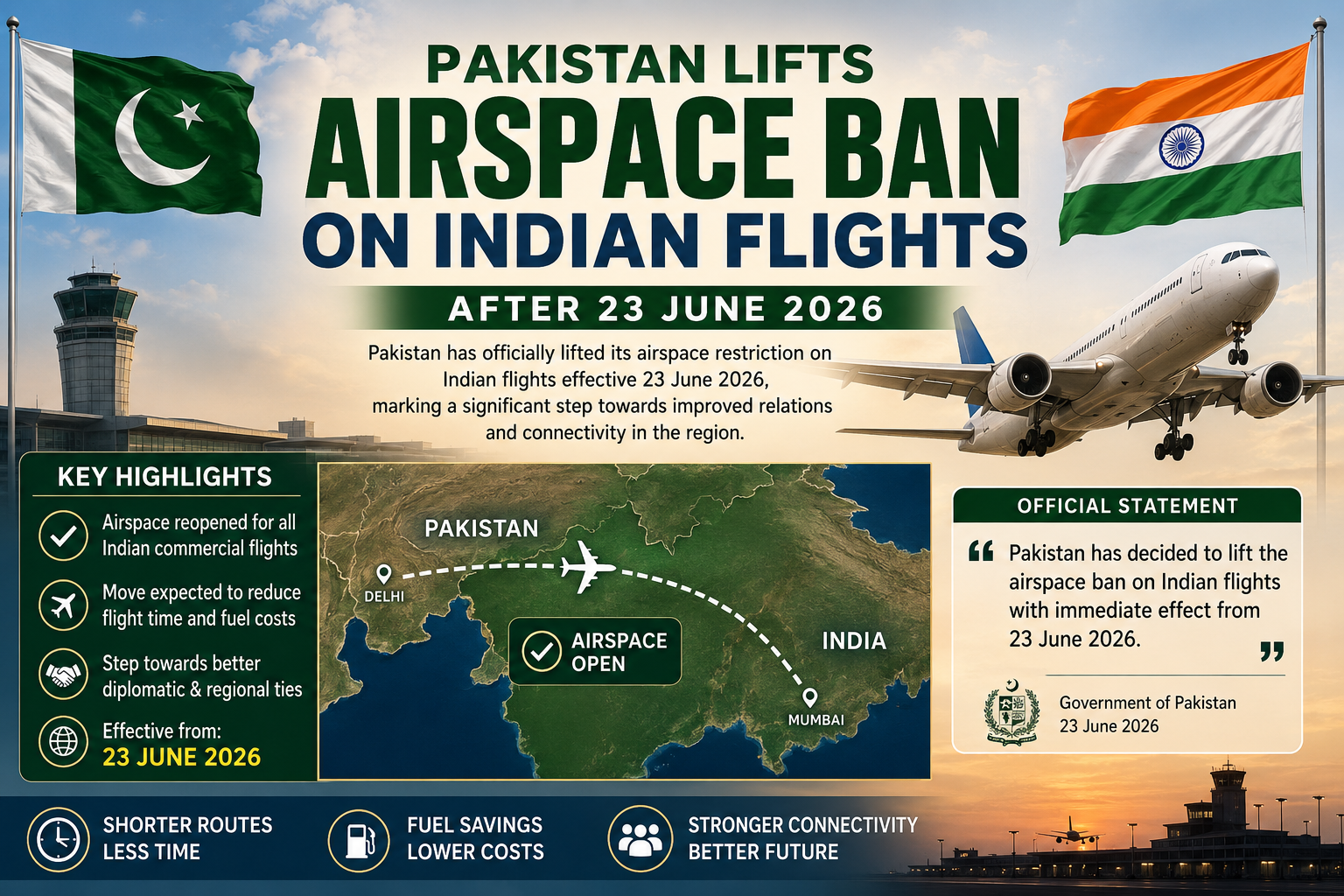
Pakistan has officially ended the ban on Indian commercial, military, and private aircraft flying through its airspace. The restriction, which was in place since tensions flared earlier this year, expired on 23 June 2026 and was not extended further.
What happened
Back in April, Islamabad closed its airspace to all Indian-registered planes after a spike in border tensions. The move forced Air India, IndiGo and other carriers to take longer, costlier routes over the Arabian Sea and Iran to reach Europe, North America, and the Gulf. Flight times went up by 45-90 minutes. Fuel bills shot up too.
The ban was set to last “until 23 June 2026” according to a NOTAM issued by Pakistan’s Civil Aviation Authority. Once that date passed, air traffic controllers in Lahore and Karachi FIRs started accepting Indian flight plans again.
Why it matters for passengers and airlines
- Shorter flights: Mumbai-Delhi-London and Delhi-Toronto routes can now cut across Punjab and Sindh again. That saves airlines millions in fuel every month.
- Lower fares: When fuel costs drop, ticket prices usually follow. Passengers on Europe and US routes may see a small dip in fares over the next few weeks.
- Cargo and private jets: Cargo planes and business jets also get the direct route back. For time-sensitive shipments, this is a big relief.
India’s aviation ministry hasn’t issued a formal statement yet, but flight tracking data already shows Indian aircraft using Pakistani airspace on 24 June.
The bigger picture
This isn’t just about planes. Airspace access has always been one of the first things both countries open or close when relations go up or down. Pakistan’s decision to let the ban lapse comes days after both PM Shehbaz Sharif and Army Chief Asim Munir were part of Iran-US mediation talks in Switzerland. Analysts say the goodwill from that diplomatic role may have played a part.
Still, the underlying issues haven’t gone away. Border skirmishes, visa restrictions, and cricket politics remain. One NOTAM doesn’t fix decades of tension. But it does mean one less headache for travelers stuck in middle seats.
Final thought
Airspace bans sound technical, but real people feel them. A mother flying from Lahore to meet her son in London. A student racing to catch a connecting flight in Dubai. A small exporter whose mangoes spoil on a longer cargo route.
Opening the skies again won’t solve everything between India and Pakistan. But it’s a small, practical step that makes daily life a little easier for thousands of ordinary people. And in this region, small practical steps are often worth more than big speeches.