
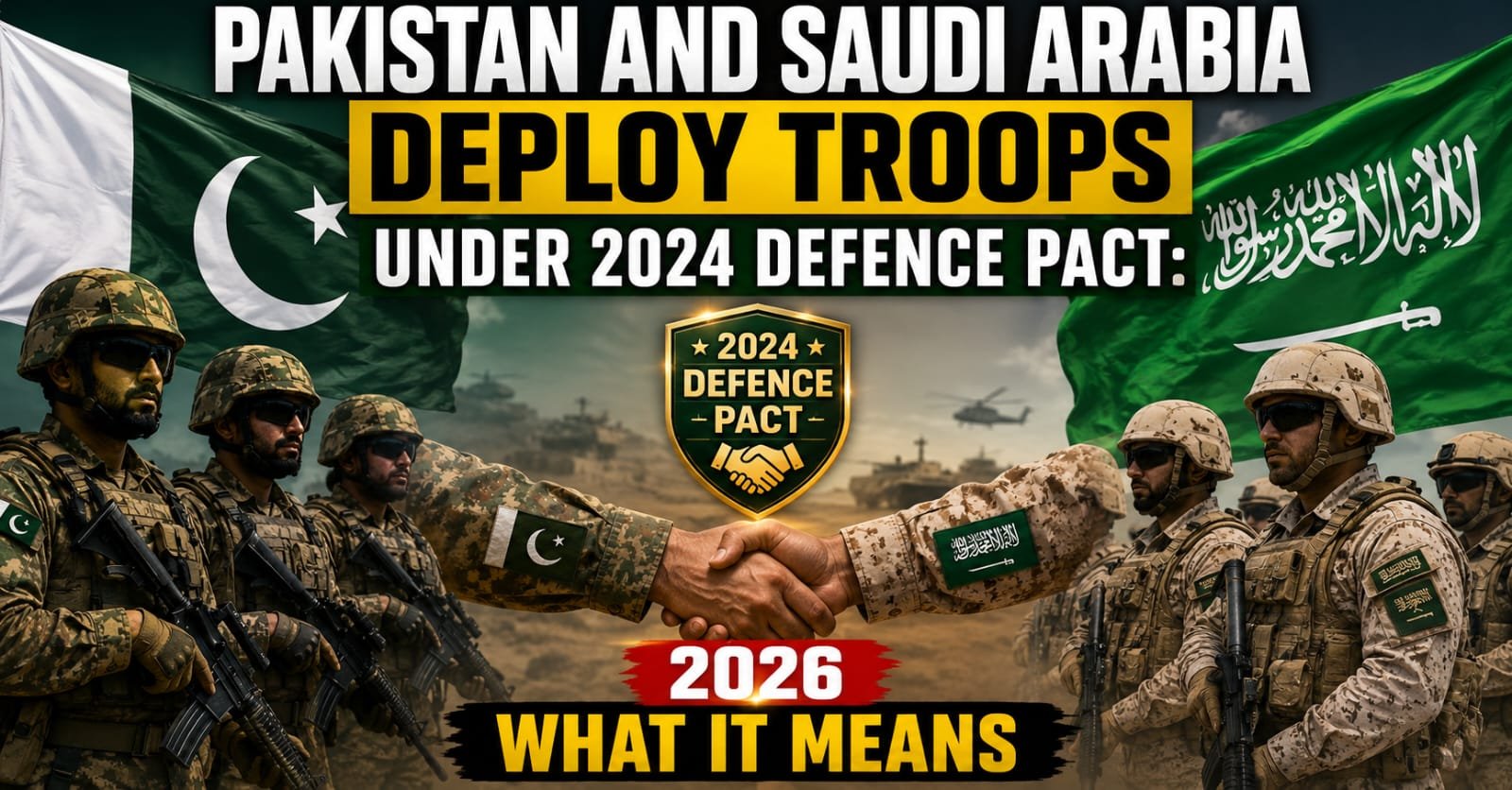
ISLAMABAD — A Pakistani military contingent of around 13,000 soldiers and 10 to 18 fighter jets reached Saudi Arabia’s King Abdulaziz Air Base last month as part of a joint defence agreement signed in 2024. Saudi Arabia’s Ministry of Defence confirmed the deployment, saying it’s meant to boost coordination and readiness between the two armed forces.
The deal is simple on paper but big in meaning. Under the pact, any attack on one country will be treated as an attack on the other. For Pakistan, it’s the first large-scale troop deployment to the Gulf since the agreement came into force. For Saudi Arabia, it adds experienced manpower and air cover at a time when the region stays tense.
Why this deployment now
The Gulf has been on edge for months. US strikes on Iran, drone and missile attacks on American bases in Jordan, Kuwait and Bahrain, and rising oil prices around the Strait of Hormuz have kept military planners busy. Oil is trading near $90-$92 per barrel because of the risk.
In that context, both Riyadh and Islamabad see value in showing a united front. The Pakistani contingent includes PAF fighter jets and support aircraft. Officials in both capitals say the goal isn’t to start anything, but to deter it. The message is basically: “Don’t test this line.”
What Pakistan gains
- Strategic space: Pakistan has wanted a stronger role in Gulf security for years. This deployment puts boots and jets on the ground, not just statements.
- Training and money: Joint exercises, base access, and logistics support help the PAF and Army train in new conditions. Defence cooperation also opens doors for economic ties.
- Diplomatic weight: PM Shehbaz Sharif has been pushing Pakistan as a peace broker – he recently invited the US and Iran for talks in Islamabad. Being inside Saudi’s security circle gives Pakistan more credibility when it talks about de-escalation.
What Saudi gains
Saudi Arabia gets battle-tested troops and air support without a long recruitment and training cycle. The PAF has decades of experience, and the Army’s counter-insurgency background is useful in a region where threats shift fast. The deployment also signals to Iran and others that Saudi’s defence partnerships go beyond Western suppliers.
The other side of it
Not everyone is comfortable. Critics in Pakistan ask if sending troops abroad will stretch resources when the country faces its own security challenges. Others worry about getting pulled into Gulf rivalries. The government’s answer so far: this is a mutual defence pact, not a blank cheque for foreign wars. The troops are there for coordination and deterrence, not offensive action.
Final thought
Defence pacts look good on paper until they’re tested. This one is being tested now, just by existing.
The real test isn’t in the number of jets or soldiers. It’s whether this partnership keeps the region calmer, or pulls both countries deeper into someone else’s fight. For Pakistan, the balance is tricky – stand with an ally, protect shared interests, but don’t lose independence in decision-making.
If it works, Pakistan gets respect in the Gulf and more leverage at the negotiating table. If it fails, the cost is both blood and credibility. For now, 13,000 soldiers and a squadron of jets are sitting at King Abdulaziz Air Base as a signal. What happens next will depend less on the hardware and more on the choices leaders make in the next few months.