
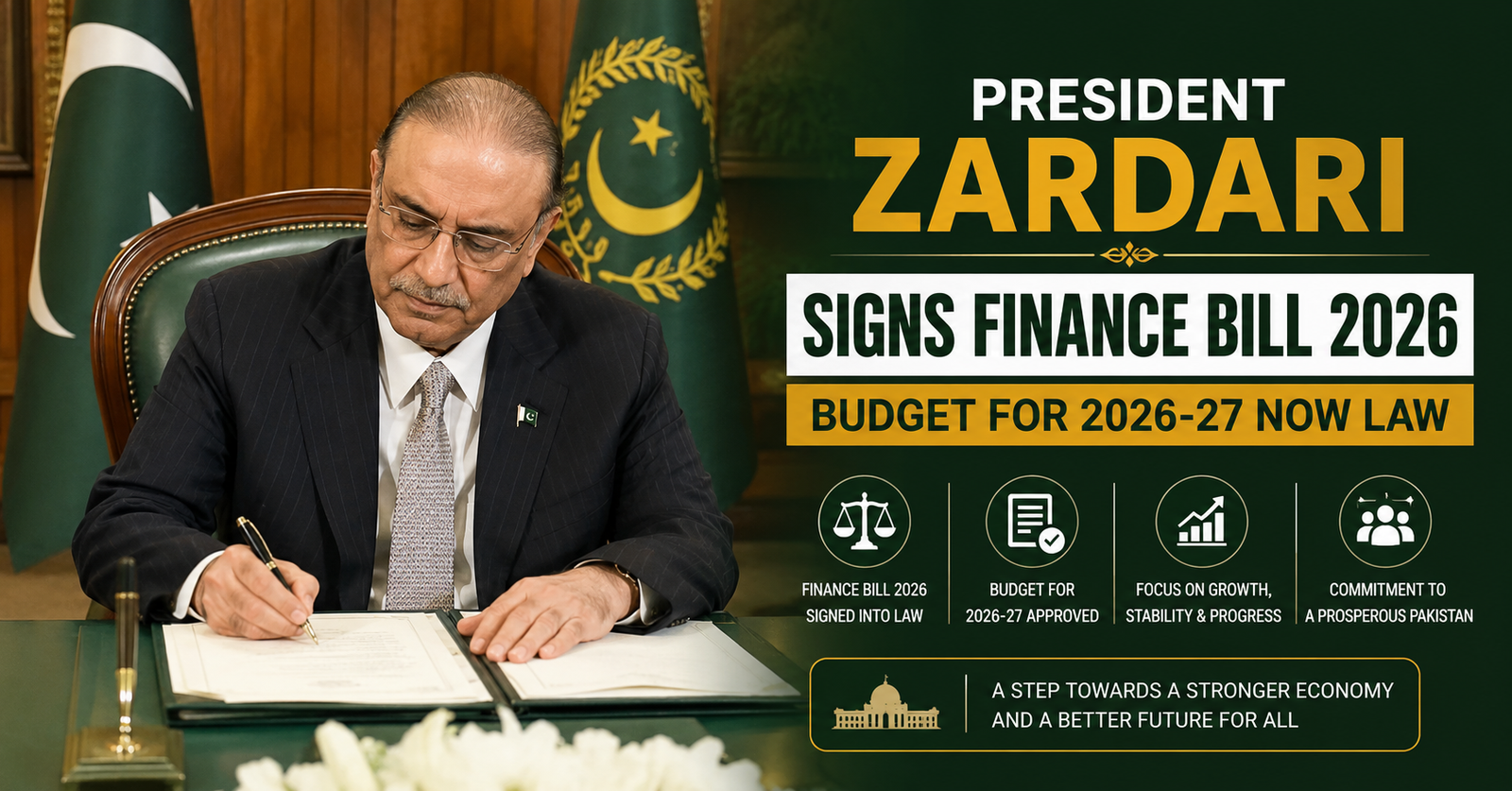
Islamabad, June 26, 2026 — It’s official now. President Asif Ali Zardari has put his signature on the Finance Bill 2026. That means Pakistan’s budget for the year 2026-27 is law, and the new rules will kick in from July 1.
The National Assembly had passed it earlier this week. Most of the opposition’s changes didn’t make it through.
So, What’s Actually in the Budget
The government is calling it a “stability budget.” Basically, the idea is to keep spending under control, stick to IMF targets, and make subsidies more targeted instead of handing them out to everyone.
Taxes and Revenue
FBR’s target is higher this time. But the plan isn’t just to jack up rates for everyone. They want more people and businesses in the tax net. Think more documentation, more digital tracking. Exporters will keep some of their benefits. Luxury items and higher incomes? They’ll pay more.
Spending and Development
Most of the money is still going to the usual big things: debt payments, defence, and provinces. Development spending got a small bump — roads, energy, social programs. Education and health budgets are up too, but let’s be honest, a lot of people will say it’s still not enough.
Subsidies
This is the big shift. No more blanket energy subsidies. The government is moving that money to BISP and other programs for low-income families. Fuel prices will keep moving with global oil rates, plus the petroleum levy. The idea is to make it more sustainable.
What Politicians Are Saying
The government says this was needed. “Without these steps, we’d be in bigger trouble,” one official put it.
The opposition wasn’t having it. They staged a walkout in the Assembly. Their point: this will make life more expensive for regular families. They wanted more relief for small businesses and more cash for schools and hospitals.
Where the Economy Stands
Inflation is down from last year, but it’s still something everyone feels. The rupee has been steady lately, and reserves look better after new money came in. The problem is debt. It’s heavy. And oil prices? Nobody knows where they’re going.
A lot of this budget was shaped by talks with the IMF. The targets, the energy reforms, the levy — it’s all connected. The government says hitting those marks is important to keep funding and trust from outside.
Final Thought
Look, signing a bill is one thing. Living with it is another.
From July, this budget will show up in real life. In the bazaar. At the pump. In your monthly bills. If it helps keep things stable without breaking people’s budgets, it’ll be seen as a win. If prices go up and paychecks don’t, then all the talk in Islamabad won’t matter much.