
Introduction
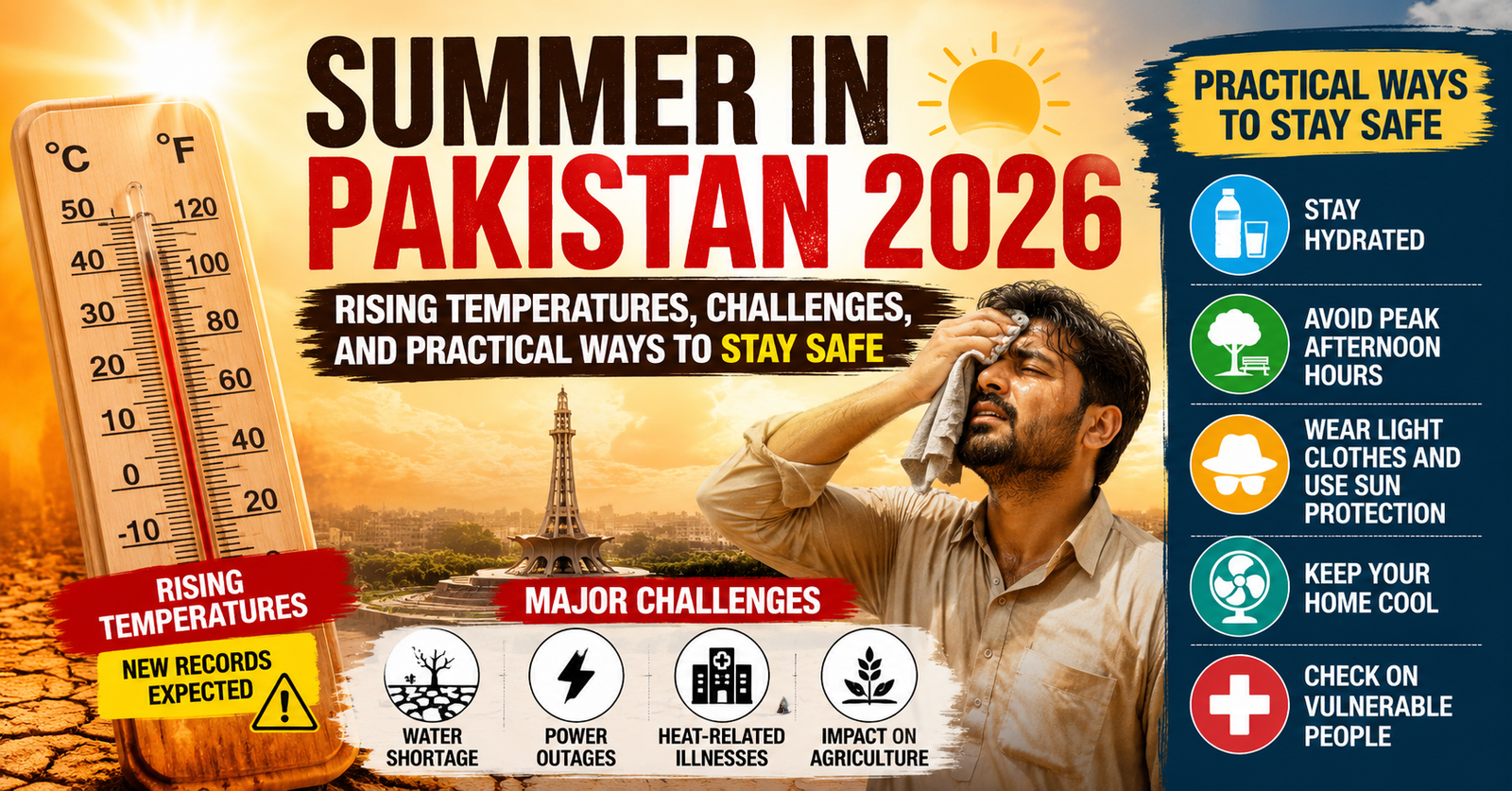
The summer of 2026 in Pakistan has once again highlighted the growing challenge of extreme heat. Across many parts of the country, temperatures have reached exceptionally high levels, making daily life difficult for millions of people. Cities in Sindh, southern Punjab, and Balochistan have experienced prolonged heatwaves, while urban areas continue to struggle with rising temperatures due to rapid development and limited green spaces.
Scientists and climate experts believe that climate change is one of the primary reasons behind the increasing frequency and intensity of heatwaves. Combined with deforestation, water shortages, and expanding cities, Pakistan is becoming more vulnerable to extreme weather conditions each year.
Summer in Pakistan 2026;Cause of extreme heat
Several environmental and human-related factors contribute to the increasing summer temperatures in Pakistan.
Climate Change
Global climate change has caused average temperatures to rise worldwide. Pakistan, despite contributing only a small percentage of global greenhouse gas emissions, is among the countries most affected by climate-related disasters. Heatwaves are becoming longer, stronger, and more frequent than they were a decade ago.
Deforestation
Trees naturally cool the environment by providing shade and releasing moisture into the air. Unfortunately, continuous deforestation and the reduction of green spaces have increased land temperatures, especially around major cities.
Urbanization
Rapid urban growth has replaced natural landscapes with concrete buildings, roads, and commercial areas. These surfaces absorb and retain heat throughout the day, creating what is known as the “urban heat island” effect, where cities remain significantly warmer than surrounding rural areas.
Water Scarcity
Lower rainfall and increasing pressure on water resources reduce the natural cooling effect of rivers, lakes, and vegetation. As water becomes scarcer, both agriculture and daily life become more difficult during the summer months.
Effects of Extreme Heat
Extreme temperatures affect nearly every aspect of life in Pakistan.
Health Risks
High temperatures can lead to serious medical conditions, including:
- Heatstroke
- Dehydration
- Heat exhaustion
- Dizziness and fatigue
- Increased risk for heart and respiratory patients
Children, elderly individuals, outdoor workers, and people with chronic illnesses are particularly vulnerable during heatwaves.
Agriculture
Pakistan’s economy depends heavily on agriculture. Rising temperatures reduce crop yields, increase irrigation demands, and place additional stress on farmers. Wheat, cotton, rice, and vegetable production may all suffer if heatwaves continue to intensify.
Energy Demand
As temperatures rise, the use of air conditioners, fans, and cooling systems increases dramatically. This places significant pressure on the national electricity grid, sometimes leading to power shortages and higher energy costs.
Economic Impact
Extreme heat reduces worker productivity, particularly for construction workers, farmers, delivery personnel, and others who spend long hours outdoors. Businesses may also experience reduced operating hours and higher operating costs.
How to Stay Safe During Summer
Protecting yourself during periods of extreme heat is essential. Some practical safety measures include:
- Drink plenty of water throughout the day, even if you do not feel thirsty.
- Avoid outdoor activities during the hottest hours, usually between 11:00 a.m. and 4:00 p.m.
- Wear lightweight, loose-fitting, and light-colored clothing.
- Use sunscreen, sunglasses, and a wide-brimmed hat when outside.
- Eat fresh fruits and vegetables with high water content, such as watermelon, cucumber, and oranges.
- Keep your home well-ventilated and use fans or air conditioning whenever possible.
- Check regularly on elderly family members, young children, and people with medical conditions.
What Can Be Done to Reduce the Impact?
Addressing rising temperatures requires both government action and public participation.
Government initiatives should focus on expanding urban forests, improving water management, strengthening heatwave early warning systems, investing in renewable energy, and encouraging climate-resilient infrastructure.
Individuals can also make a difference by planting trees, conserving water, reducing unnecessary energy consumption, supporting environmentally friendly practices, and raising awareness about climate change within their communities.
Conclusion
The summer of 2026 serves as another reminder that rising temperatures are becoming one of Pakistan’s most serious environmental challenges. While extreme heat cannot be eliminated overnight, its impact can be reduced through better planning, stronger environmental policies, and responsible actions by both the government and the public.
By protecting natural resources, promoting sustainable development, and preparing for future climate challenges, Pakistan can build greater resilience against increasingly intense summer seasons and create a safer environment for future generations.