
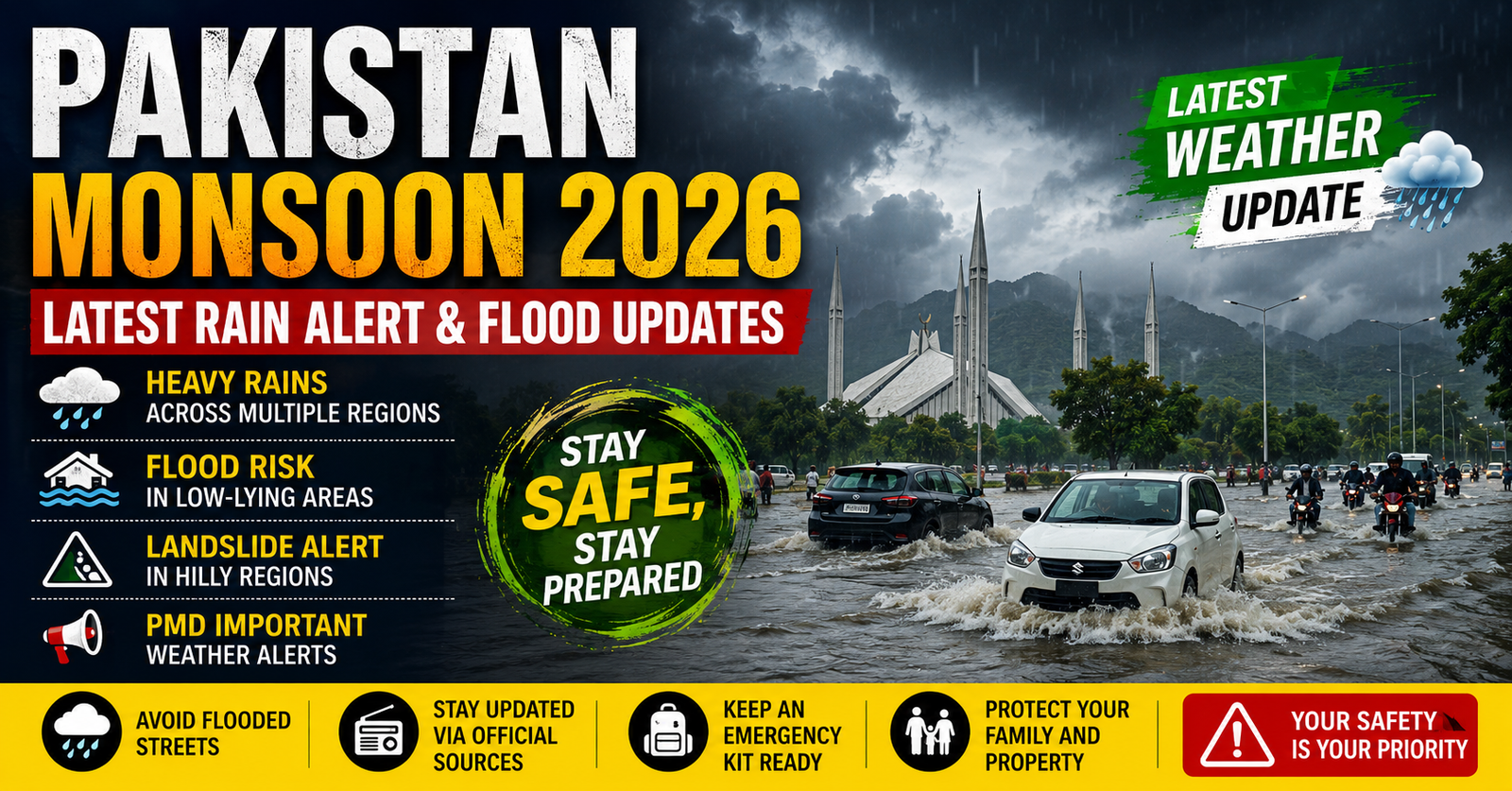
Pakistan Monsoon 2026
Pakistan’s Monsoon 2026 season has once again brought widespread rainfall to many parts of the country. While the rain has provided relief from extreme summer temperatures, it has also increased the risk of urban flooding, flash floods, landslides, and travel disruptions.
The Pakistan Meteorological Department (PMD) has warned that several areas may continue to receive moderate to heavy rainfall over the coming days. Residents living near rivers, streams, and low-lying areas are advised to remain alert and follow official weather advisories.
This article covers the latest monsoon situation, affected areas, possible risks, safety precautions, and what citizens should expect during the remaining weeks of the season.Pakistan Monsoon 2026: Latest Rain Alerts, Flood Risks & Safety Guide
What Is the Pakistan Monsoon
The monsoon is a seasonal weather system that brings moist winds and rainfall to South Asia every year, generally from July to September. Pakistan receives varying amounts of rainfall depending on the region.
Northern and northeastern areas usually experience heavier rainfall, while southern regions receive less rain but may still face intense thunderstorms and localized flooding.
Monsoon rains play a vital role in agriculture, water reservoirs, and groundwater recharge. However, excessive rainfall can also lead to severe flooding and infrastructure damagePakistan Monsoon 2026: Latest Rain Alerts, Flood Risks & Safety Guide.
Latest Pakistan Monsoon 2026 Weather Situation
Several provinces have experienced continuous rainfall during the current monsoon spell.
Punjab
Cities including:
- Lahore
- Rawalpindi
- Islamabad
- Gujranwala
- Faisalabad
- Sialkot
have witnessed intermittent heavy showers, resulting in water accumulation on roads and traffic congestion.
Khyber Pakhtunkhwa (KP)
Mountainous districts remain vulnerable to:
- Flash floods
- Landslides
- River overflows
- Road blockages
Tourists traveling to northern areas should monitor weather forecasts before planning their trips.
Sindh
Karachi and nearby districts have received scattered rainfall, causing temporary urban flooding in several low-lying neighborhoods.
Municipal authorities continue drainage operations in affected areas.
Balochistan
Certain districts have reported thunderstorms accompanied by heavy rainfall, increasing the possibility of flash flooding in seasonal streams.
Gilgit-Baltistan & Azad Kashmir
These scenic regions continue to experience frequent rainfall.
Authorities have advised travelers to avoid unnecessary journeys due to the possibility of:
- Landslides
- Road closures
- Falling rocks
- Fast-flowing streams
Areas Most at Risk During Monsoon 2026
Some regions remain more vulnerable than others due to geography and drainage conditions.
These include:
- Low-lying urban areas
- Riverbank communities
- Mountain valleys
- Seasonal stream crossings
- Poor drainage zones
- Hilly roads
Residents in these areas should remain prepared for changing weather conditions.
Flood Risk During Pakistan Monsoon 2026
Heavy rainfall significantly increases the risk of flooding.
Possible flood situations include:
Urban Flooding
Large cities often experience water accumulation due to blocked drainage systems and intense rainfall over short periods.
Flash Floods
Mountainous regions can experience sudden flash floods with little warning after heavy rainfall.
River Flooding
Continuous rain in upper catchment areas may increase water levels in major rivers and tributaries.
Landslides
Heavy rainfall weakens mountain slopes, making landslides more likely in northern Pakistan.
Impact on Daily Life
Monsoon weather affects millions of Pakistanis every year.
Common impacts include:
- Traffic jams
- Flight delays
- Power outages
- Internet interruptions
- School closures
- Crop damage
- Property losses
- Transportation delays
Local authorities continue monitoring vulnerable areas throughout the season.
Safety Tips During Pakistan Monsoon
Residents should take practical precautions to stay safe during heavy rainfall.
Stay Updated
Follow official weather forecasts and emergency alerts regularly.
Avoid Floodwater
Never attempt to drive or walk through deep floodwater, as strong currents can be dangerous.
Secure Your Home
Clean roof drains and surrounding drainage channels before heavy rainfall begins.
Prepare an Emergency Kit
Keep essentials such as:
- Drinking water
- Flashlights
- Power banks
- Medicines
- Important documents
- Mobile chargers
readily available.
Drive Carefully
Reduce speed during rain and avoid flooded roads whenever possible.
Advice for Travelers
If you plan to travel during the monsoon season:
- Check the latest weather forecast.
- Confirm road conditions before departure.
- Avoid unnecessary mountain travel during heavy rainfall.
- Keep emergency contacts saved on your phone.
- Follow local administration instructions.
Monsoon Benefits for Pakistan
Despite the challenges, monsoon rains provide several important benefits.
These include:
- Improved agricultural production
- Increased water storage
- Better groundwater recharge
- Lower summer temperatures
- Support for hydroelectric power generation
Balanced rainfall is essential for Pakistan’s economy and farming sector.
Agriculture and Monsoon 2026
Farmers depend heavily on seasonal rainfall for crops such as:
- Rice
- Sugarcane
- Cotton
- Maize
- Vegetables
However, excessive rainfall can damage standing crops, delay harvesting, and increase the spread of crop diseases.
Agricultural experts advise farmers to monitor weather conditions closely and protect fields where possible.
Government Response
Provincial and local authorities continue to:
- Monitor rivers and canals
- Clear drainage systems
- Deploy emergency rescue teams
- Issue weather advisories
- Prepare relief operations where necessary
Emergency services remain on alert in districts vulnerable to flooding.
Climate Change and Stronger Monsoons
Climate experts believe changing weather patterns have increased the frequency of extreme rainfall events across South Asia.
Higher temperatures allow the atmosphere to hold more moisture, which can lead to heavier downpours over shorter periods.
This makes disaster preparedness more important than ever for communities across Pakistan.
Frequently Asked Questions
When does Pakistan’s monsoon season end
The monsoon season generally continues until September, although weather conditions vary each year.
Which areas receive the heaviest rainfall?
Northern Punjab, Islamabad, Khyber Pakhtunkhwa, Azad Kashmir, and Gilgit-Baltistan often receive the highest rainfall totals.
Is flooding expected every time it rains?
Not necessarily. Flooding depends on rainfall intensity, drainage conditions, river levels, and local geography.
Where can people check weather updates?
Residents should rely on official weather forecasts and local government advisories for the latest information
Final Thoughts
The Pakistan Monsoon 2026 continues to bring both opportunities and challenges. While seasonal rainfall supports agriculture and replenishes water resources, it also increases the risk of flooding, landslides, and travel disruptions.
Staying informed, following official weather advisories, and taking simple safety precautions can help protect lives and property throughout the monsoon season. As weather patterns continue to evolve, preparedness remains the best defense against extreme rainfall and flood-related emergencies.