
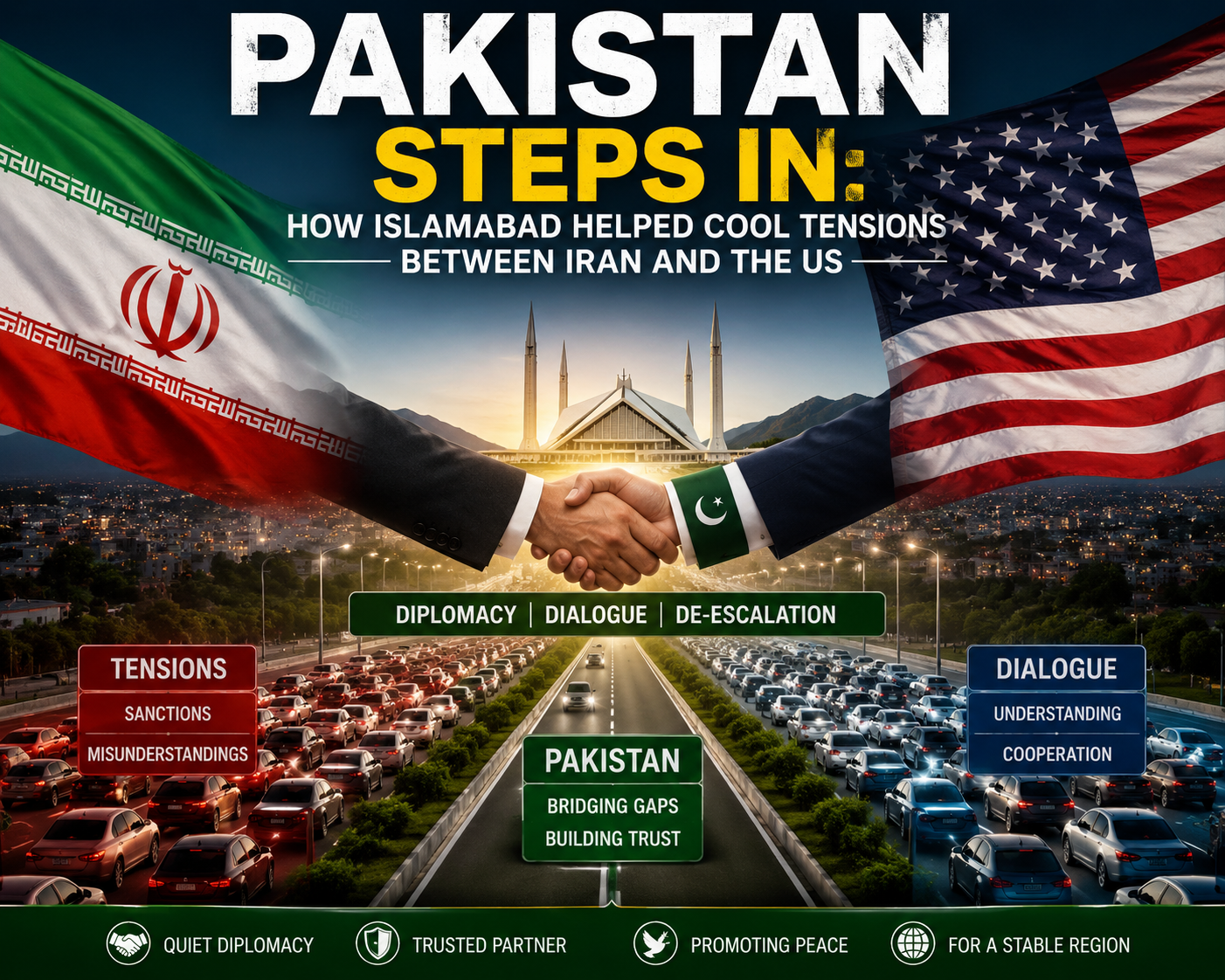
Islamabad – Pakistan found itself back in the middle of big-power diplomacy last weekend, and this time it may have stopped a much larger crisis. Prime Minister Shehbaz Sharif and Army Chief Field Marshal Asim Munir joined talks between Iran and the United States in Buergenstock, Switzerland, bringing months of quiet backchannel work into the open.
The talks came at a tense moment. A wider Iran-US conflict threatened to shut down the Strait of Hormuz. That would have choked global oil supplies and sent shockwaves through the world economy. Both sides were digging in, and public statements weren’t helping.
That’s where Pakistan stepped in. For months, Islamabad had been talking to both Tehran and Washington behind the scenes. By June 25, that work led to direct contact in Switzerland. Photos from the resort town showed US Vice President JD Vance greeting Field Marshal Asim Munir with a hug before discussions began. Both Iranian and American officials, along with several world leaders, later thanked Pakistan for helping ease the standoff.
“We’ve seen Pakistan play this role before, but this was high-stakes,” said one diplomat familiar with the talks. “Keeping Hormuz open was the immediate win. The bigger win was getting both sides to sit in the same room.”
What’s in it for Pakistan
Analysts say the diplomatic credit could translate into economic goodwill. Khurram Schehzad, adviser to Pakistan’s finance minister, put it plainly: “A nation that delivers stability at home and helps advance stability abroad becomes a more credible destination for investment.”
Pakistan is targeting 4% growth and 8.2% inflation for the next fiscal year. Any boost to investor confidence helps, especially after years of IMF programs and boom-bust cycles. The country’s role in defusing a conflict that could have disrupted oil and trade routes gives it a stronger story to tell foreign investors.
But experts are cautious. They point out that one diplomatic success won’t fix deeper problems: a narrow tax base, social inequality, and repeated bailouts. “Goodwill helps, but it’s not a substitute for reform,” an Islamabad-based economist noted.
The bigger picture
For Pakistan, the Iran-US mediation adds to a long history of bridge-building in the region. It also puts Islamabad in a rare position: trusted enough by both Washington and Tehran to bring them to the table. That trust was built through quiet, consistent engagement, not headlines.
The immediate result is clear – the threat to Hormuz has eased for now. The longer-term question is whether Pakistan can turn that diplomatic capital into real economic gains: more investment, better trade terms, and stronger regional ties.
Final Thought
Pakistan’s role in the Iran-US talks shows that middle powers still matter when tensions run high. Islamabad didn’t dictate terms, but it created space for dialogue when none seemed possible. That’s valuable diplomacy.
Whether it becomes more than a moment depends on what happens next at home. If Pakistan can pair this global credibility with economic stability and reforms, the world will start looking at it differently – not just as a crisis manager, but as a partner worth investing in. If not, this will be remembered as a good week in a tough decade.