
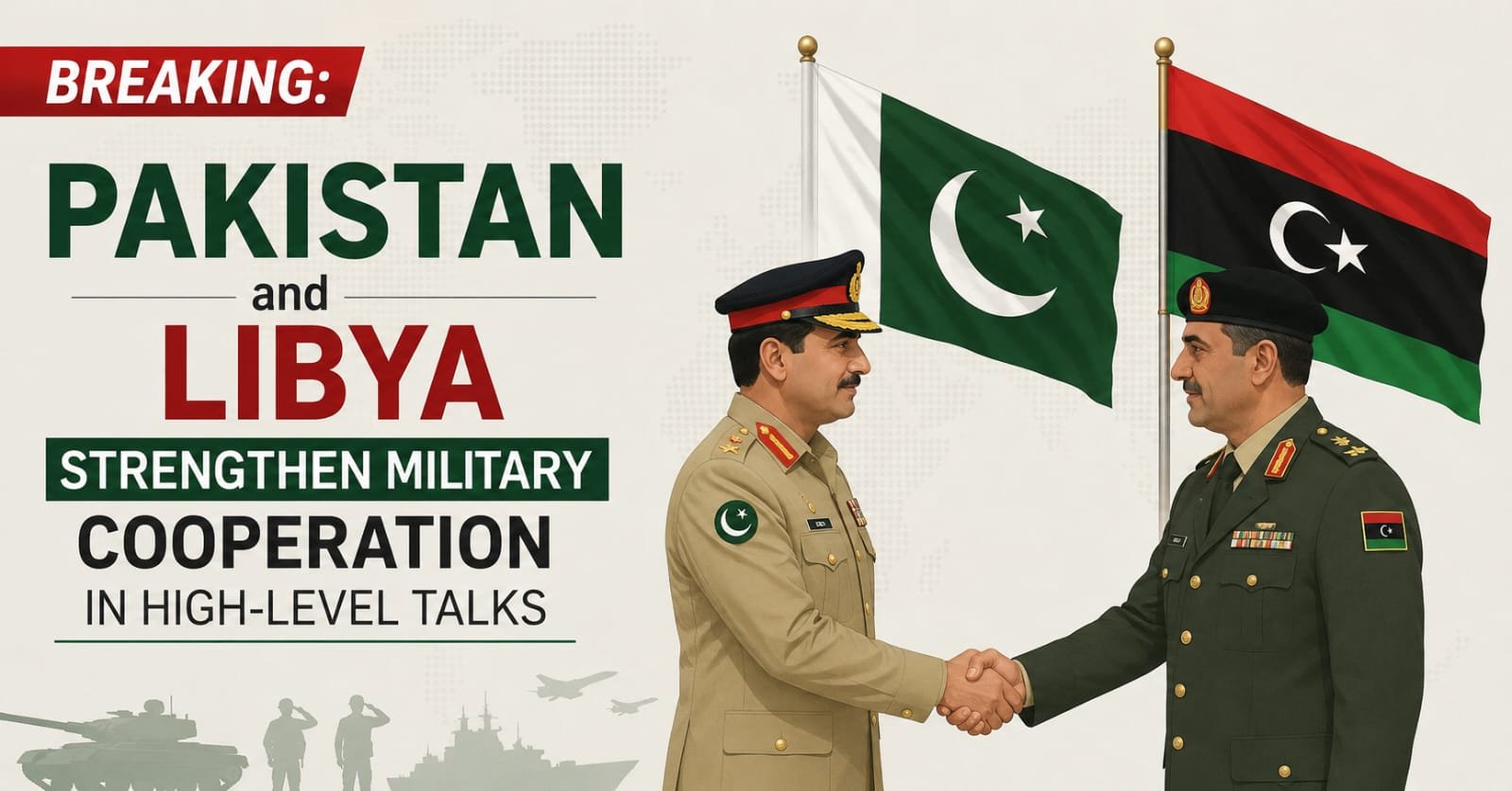
RAWALPINDI – Officials from Pakistan and Libya sat down at GHQ Rawalpindi on June 24 and walked out with a clear plan to work closer on defence matters. The Libyan side was led by Lt. Gen. Saddam Khalifa Haftar, the deputy commander of Libya’s armed forces. Pakistan’s military brass hosted the meeting.
It wasn’t a ceremony with signed papers and photo ops. Both sides kept it practical. The conversation circled around training, military education, and how to handle common security problems like border threats and counter-terrorism. They also talked about sending officers for short exchange programs and running joint drills down the line.
No deal was sealed on the spot. Instead, the two sides agreed to set up working groups. The job of those groups is simple: figure out what can actually start in the next few months and avoid the usual delays.
For Libya, the interest is straightforward. The country is still rebuilding its security setup and needs hands-on training and technical know-how. Pakistan has that experience from years of counter-insurgency work and peacekeeping missions. For Pakistan, the meeting fits into a wider push to build defence links in North Africa. It’s not about replacing old partners, but about having more options on the table.
The next step is already on the calendar. Follow-up talks are expected in Tripoli later this year. A Pakistani team will likely visit Libya first to see what’s needed on the ground. If that goes smoothly, you could see Pakistani instructors working with Libyan units by early next year.
Final thoughts
This meeting won’t make it into history books as a landmark treaty. But that’s kind of the point. Both sides seem more interested in getting small things done than in making big announcements.
If the working groups actually deliver, Pakistan and Libya could end up with one of the more active defence partnerships in the region by next year. It’s not about shifting global alliances. It’s about two militaries deciding to help each other with real problems on the ground. And right now, that’s probably more useful than another signed memo that sits in a file.