
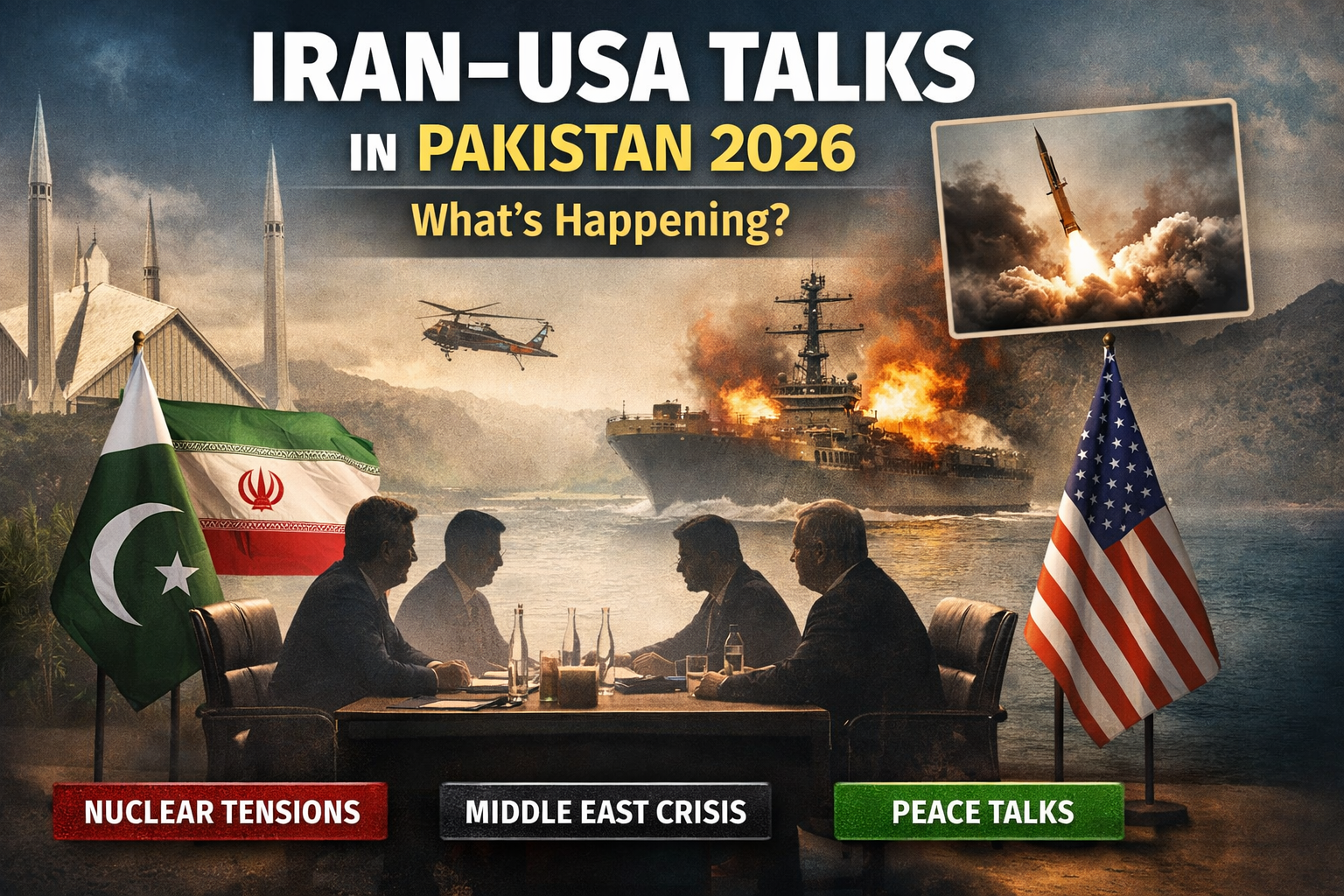
In 2026, global attention has shifted to Pakistan, where crucial negotiations between Iran and the United States are taking place. These talks come after a period of intense conflict in the Middle East that pushed the region close to a larger war.
Background of the Conflict
In early 2026, tensions escalated when the United States, along with Israel, carried out strikes on Iranian targets. Iran responded strongly, increasing fears of a wider regional war.
This situation also impacted global oil markets and trade routes, especially around the Strait of Hormuz — one of the world’s most important oil supply channels.
To avoid further escalation, a temporary ceasefire was reached, creating space for diplomatic negotiations.
Pakistan’s Role as a Mediator
Pakistan stepped in as a neutral mediator and hosted high-level talks in Islamabad. These discussions, often referred to as the “Islamabad Talks 2026,” marked a rare moment of direct engagement between Iran and the United States — something not seen at this level for decades.
By hosting these talks, Pakistan positioned itself as an important diplomatic player on the global stage.
What Happened During the Talks?
- The talks were held in April 2026 in Islamabad
- Discussions lasted for nearly 21 hours
- No final agreement was reached
Key issues discussed included:
- Iran’s nuclear program
- U.S. economic sanctions on Iran
- Security in the Strait of Hormuz
Latest Developments (April 2026)
Recent updates suggest that progress remains uncertain:
- Iran has reportedly refused to participate in a second round of talks, citing strict U.S. conditions
- The United States has increased pressure through naval actions in the region
- Some analysts believe Iran’s stance may be a negotiation strategy to secure better terms
- Pakistan continues efforts to bring both sides back to the negotiating table
What Could Happen Next?
Experts suggest several possible outcomes:
- Talks may resume with revised conditions
- The ceasefire could be extended
- Or tensions could escalate again into conflict
For Pakistan, this situation presents a major opportunity to strengthen its global diplomatic image.
Conclusion
The Iran–USA negotiations in Pakistan are a critical development in 2026. Their success could bring stability to the Middle East, while failure may lead to further conflict.
Pakistan’s role as a mediator highlights its growing importance in international diplomacy, making these talks significant not just regionally, but globally.