
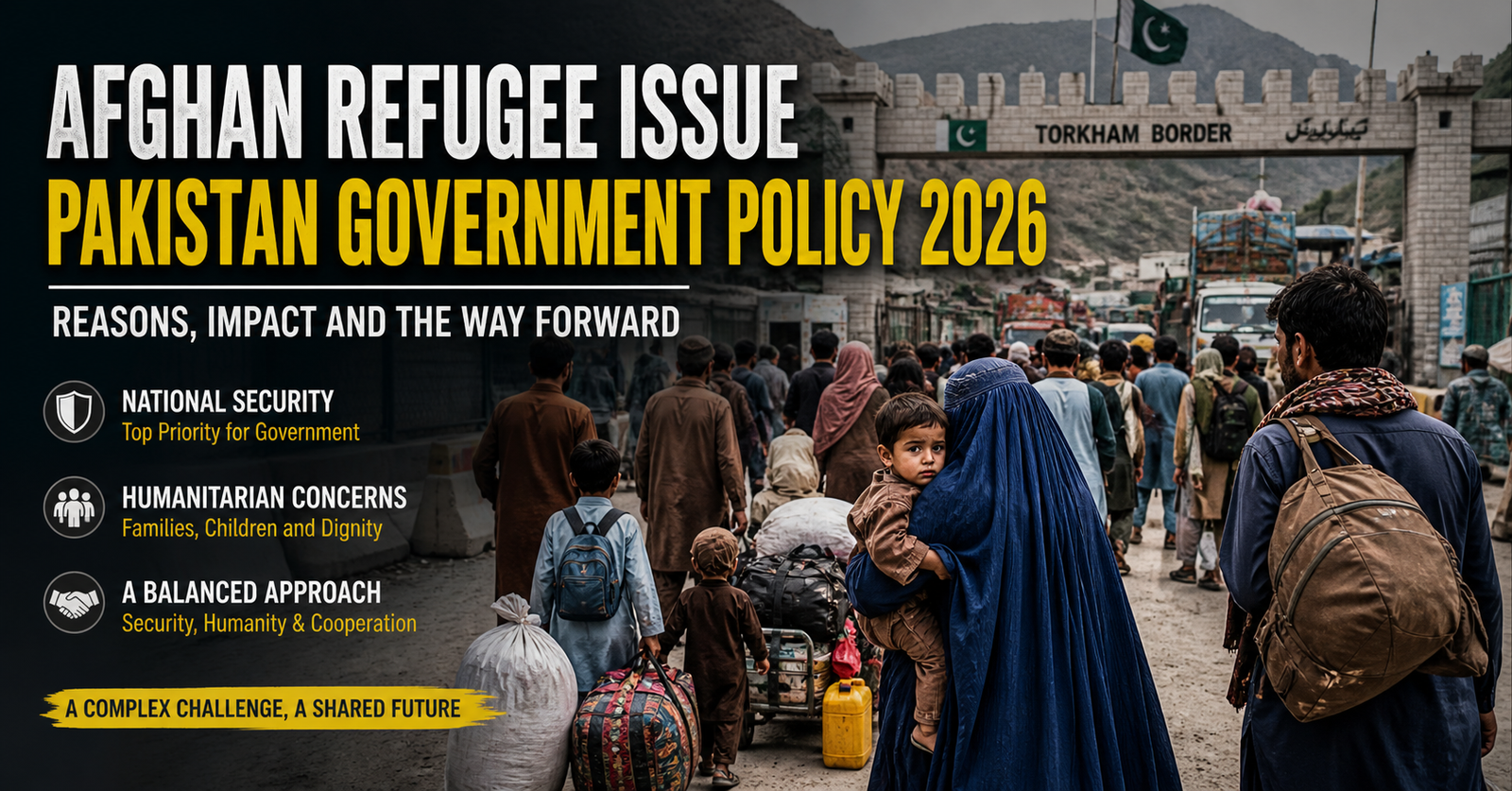
In 2026, the Afghan refugee situation has once again become a major issue for Pakistan and the international community. The government of Pakistan has introduced stricter policies targeting undocumented Afghan refugees, directly affecting millions of people. This issue is not only about national security but also involves humanitarian and economic challenges. , we explore Pakistan’s current policy, the reasons behind it, and its impact on both Pakistanis and Afghan refugees.
Background of Afghan Refugees in Pakistan
Pakistan has been hosting Afghan refugees for over four decades, especially since the Soviet-Afghan War. Millions of Afghans crossed into Pakistan seeking safety and built their lives here over the years.
According to global estimates, Pakistan remains one of the largest refugee-hosting countries in the world. Much Afghan refugees live in Pakistan’s provinces specially Khyber Pakhtunkhwa and Balochistan.
Pakistan Government Policy about Afghan Refugees in 2026
In 2026, the government introduced a strict repatriation policy for undocumented Afghan refugees. Key points include:
- Undocumented (illegal) residents are being sent back to Afghanistan
- Stronger verification through NADRA and security agencies
- Tighter border control measures
- Temporary relief for legal refugees holding valid documents
This policy is being implemented under the leadership of Shehbaz Sharif, aiming to reduce economic pressure and strengthen national security of Pakistan.
Reasons Behind the Policy
1. Security Concerns in this Policy
Authorities argue that undocumented individuals can pose security risks, making proper identification essential.
2. Economic Pressure on Pakistan
Pakistan is currently facing economic challenges such as inflation and unemployment. The presence of a large refugee population adds pressure on limited resources.
3. Documentation Issues in Pakistan
Many Afghan refugees lack proper legal documentation, making monitoring and regulation difficult for authorities.
Humanitarian Concerns on this Policy
This policy has raised serious concerns among international organizations and human rights groups:
- Families are facing sudden displacement due to these concern problems.
- Children’s education is being disrupted due to these problems.
- Afghanistan’s internal situation remains unstable.
The UN High Commissioner for Refugees has emphasized that refugee returns should be safe, voluntary, and dignified.
Ground Reality at the of Pak Afghan border
At major crossing points like Torkham and Chaman, thousands of refugees are returning:
- Families carrying belongings on trucks and buses in this situation
- Temporary camps set up for processing of Afghan refugees
- Delays due to documentation checks in Pakistan
This has created an emotional and uncertain environment for many families.
Impact on Pakistan
Positive Effects
- Improved control over security in Pakistan
- Reduction in illegal population in Pakistan
- Less pressure on public resources of Pakistan
Negative Effects
- Increased international criticism on Pakistan
- Possible damage to humanitarian reputation of Pakistan
- Rising tensions at the Pak Afghan border
Impact on Afghan Refugees
- Sudden displacement from homes
- Loss of jobs and income
- Limited opportunities in Afghanistan
Many refugees have spent decades in Pakistan, making their return both emotionally and practically difficult.
Future Outlook of Pakistan in 2026
Experts suggest that Pakistan needs a balanced approach:
- Maintain national security in Pakistan
- Protect human rights of Pakistani peoples
- Increase international cooperation for Pakistan
Stability in Afghanistan will also play a key role in resolving this issue Pak Afghan problem.
Final Thought
The Afghan refugee issue is not just a policy matter—it is deeply connected to human lives. While Pakistan’s actions may be justified from a national perspective, their implementation must ensure dignity and humanity. The year of 2026 could prove to be a turning point, where Pakistan defines how it balances security with its humanitarian responsibilities.