
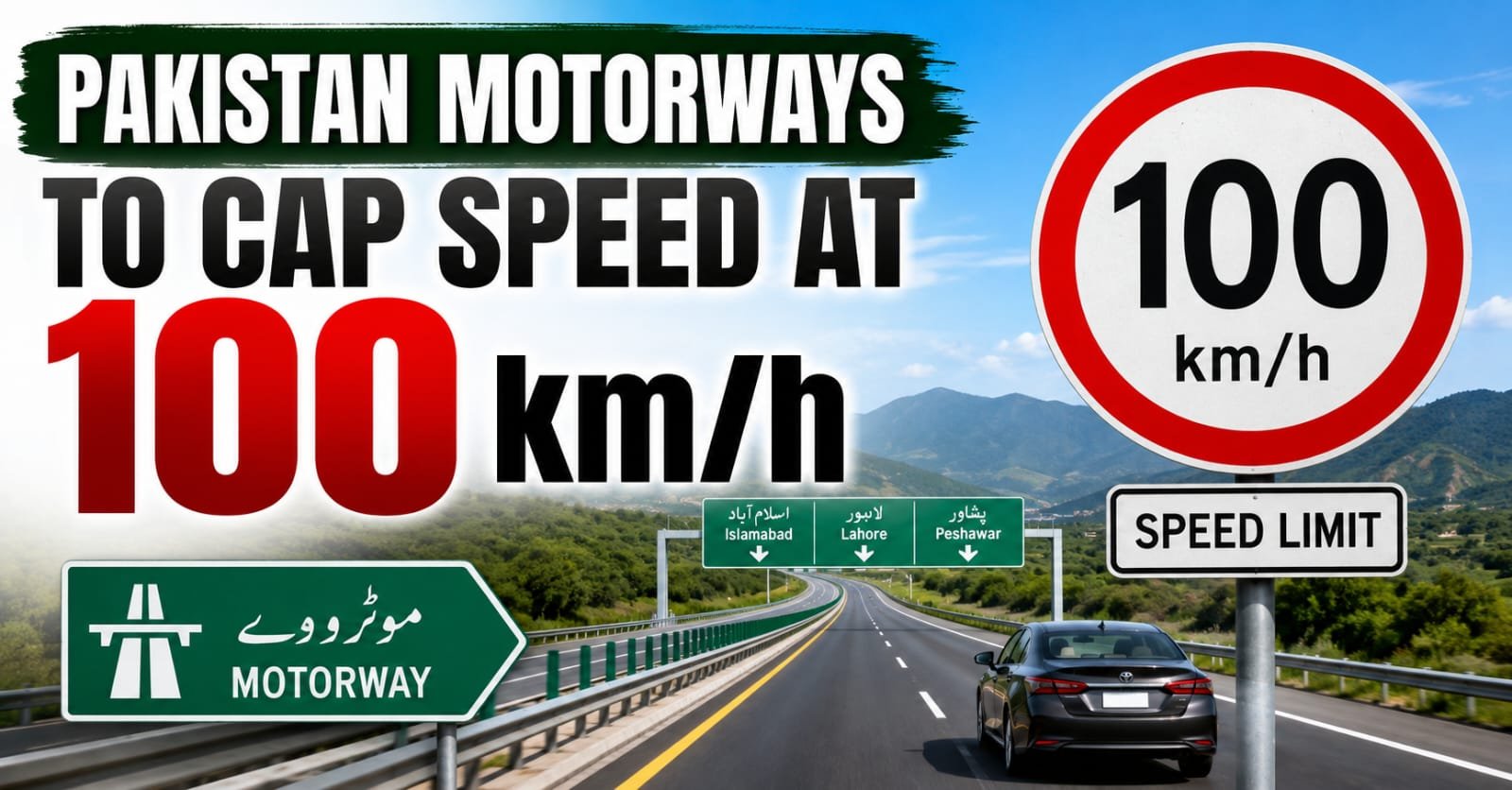
Islamabad – Pakistan’s National Highway Authority is considering lowering the speed limit on motorways from 120 km/h to 100 km/h, a move that’s sparking heated debate among drivers, transporters, and road safety experts.
The proposal, highlighted in a recent BBC Urdu report, aims to reduce fatal accidents and save fuel. NHA officials argue that driving at 100 km/h gives motorists more time to react, shortens braking distance, and puts Pakistan in line with international standards where 100-110 km/h is common.
But the plan hasn’t gone down well with everyday road users.
Why people are opposing it
For thousands of commuters who travel daily between Lahore, Islamabad, Peshawar, and Karachi, time is money. Cutting speed by 20 km/h means an extra 30-45 minutes on long routes. The Lahore-Islamabad trip, usually 3.5 hours, could stretch past 4.5 hours.
Truckers and transport companies are worried too. Longer travel time means higher operational costs, more fuel consumption at lower speeds for heavy vehicles, and delays in goods delivery. Many drivers say “accidents don’t happen because of speed alone – they happen because of mobile phone use, drowsy driving, and overloaded vehicles.”
Road safety campaigners, on the other hand, back the decision. They point to NHA data showing most motorway crashes are linked to over-speeding. At 120 km/h, even a small mistake can be fatal. At 100 km/h, the chances of survival in a crash go up significantly.
Right now, the 100 km/h limit isn’t enforced everywhere. NHA already drops the limit during fog, rain, or on specific risky sections. Making it permanent would be a major policy shift.