
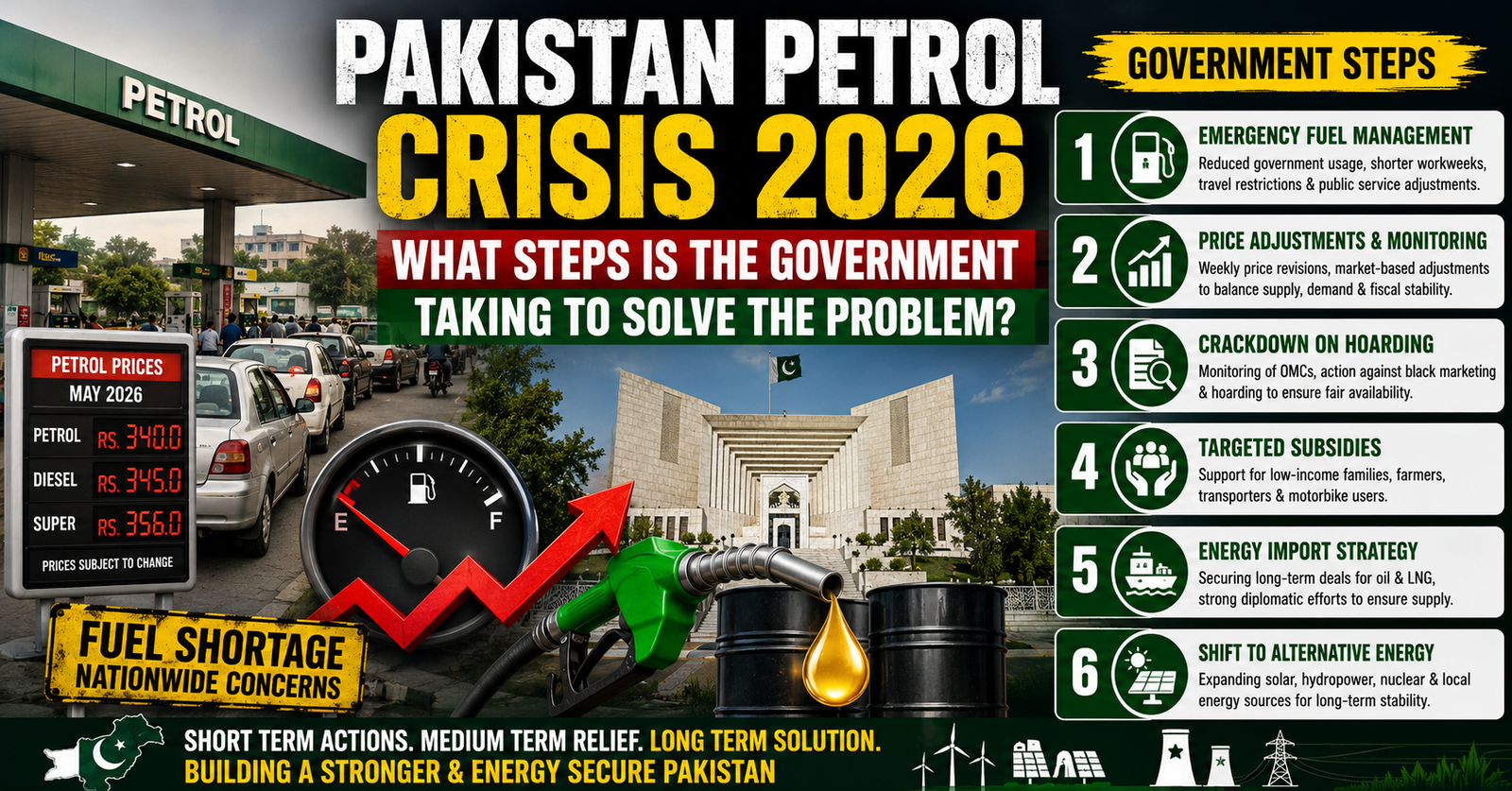
In 2026, Pakistan continues to face serious challenges related to rising petrol prices, fuel shortages, and increasing pressure on the national economy. The petrol crisis has affected millions of people across the country, including daily commuters, transport businesses, industries, and ordinary households struggling with inflation.
The rising cost of fuel has become one of the biggest concerns for the public. From transportation fares to food prices, almost every sector has been impacted by expensive petrol and diesel rates.
Why Is Pakistan Facing a Petrol Crisis
Several major reasons are contributing to the fuel crisis in Pakistan during 2026:
- Rising international crude oil prices due to Iran and Israil war
- Pressure from the International Monetary Fund (IMF) due to loan which Pakistan take to IMF for development.
- Rupee depreciation against the US dollar. The value of rupe is decreasing against US doller.
- High import bills. Due to high import billing Pakistan facing these crisis
- Increasing petroleum taxes and levies. The Pakistani government policies of high value lavies Pakistan facing these crisis.
- Political and economic instability. In Pakistan political stability is not stable due to government policies so Pakistan is going in crisis.
Since Pakistan imports a large portion of its petroleum products, global oil market changes directly affect local fuel prices.
Impact of Rising Petrol Prices on the Public
The petrol crisis has created difficulties for people from every class of society. Daily life expenses have increased rapidly because transportation costs are directly linked with fuel prices.
Major impacts include:
- Higher public transport fares
- Expensive goods delivery costs
- Increased food inflation
- Rising electricity production expenses
- Financial pressure on small businesses
- Reduced purchasing power of citizens
Many middle-class and low-income families are finding it difficult to manage monthly expenses due to continuous fuel price hikes.
Government Measures to Control the Petrol Crisis
The government of Pakistan has introduced several measures in 2026 to reduce the pressure caused by rising petrol prices and fuel shortages.
1. Promotion of Electric Vehicles (EVs)
The government is encouraging the use of electric bikes and electric vehicles to reduce dependence on imported fuel. Special incentives are being offered for EV manufacturing and charging infrastructure projects.
Officials believe that increasing EV adoption can lower fuel imports in the coming years.
2. Expansion of Public Transport
Authorities are working on improving metro bus systems and public transport services in major cities to reduce fuel consumption by private vehicles.
Cities like Lahore, Islamabad, and Karachi are expected to see further transport expansion projects.
3. Talks With International Financial Institutions
Pakistan is continuing discussions with international lenders, including the IMF, to stabilize the economy and secure financial support. Economic reforms linked with these agreements are influencing fuel pricing policies.
4. Crackdown on Fuel Smuggling
The government has increased operations against illegal fuel smuggling and hoarding activities. Authorities say smuggling creates artificial shortages and damages the national economy.
Security agencies and customs departments are conducting raids in border areas to stop illegal fuel trade.
5. Investment in Local Energy Projects
Pakistan is also focusing on local energy production projects, including:
- Renewable energy
- Hydropower projects
- Solar energy expansion
- Local oil and gas exploration
The long-term goal is to reduce dependence on imported petroleum products.
Public Reaction to Government Policies
Public opinion remains divided. Some people believe the government is trying to stabilize the economy under difficult circumstances, while others criticize continuous price increases and the growing cost of living.
Transporters, businesses, and daily wage workers are among the groups most affected by rising fuel prices.
Can Pakistan Overcome the Petrol Crisis
Economic experts believe Pakistan can gradually reduce fuel-related pressure if the country successfully,Pakistan can overcome to these problems if Pakistan takes a good step and stable the political problems and all political parties set on a page and thought about the solving of these problems then these problems can solve so Pakistan can get rid of these problems. These some steps are given in down follwing line;
- Expands renewable energy
- Improves public transportation
- Controls unnecessary imports
- Stabilizes the currency
- Encourages electric vehicle adoption
However, these solutions may take time before ordinary citizens experience major relief.
Final Thoughts
The petrol crisis in Pakistan during 2026 has become a major economic and public issue affecting millions of people nationwide. Rising international oil prices, economic pressure, and currency instability have made fuel more expensive and increased inflation across multiple sectors.
The government is taking several steps, including promoting electric vehicles, improving public transport, controlling smuggling, and investing in local energy resources. While these measures may not provide immediate relief, they could help Pakistan build a more stable and energy-efficient future in the long run.
For now, the biggest challenge remains balancing economic reforms with public relief as citizens continue to face the financial burden of expensive fuel prices.