
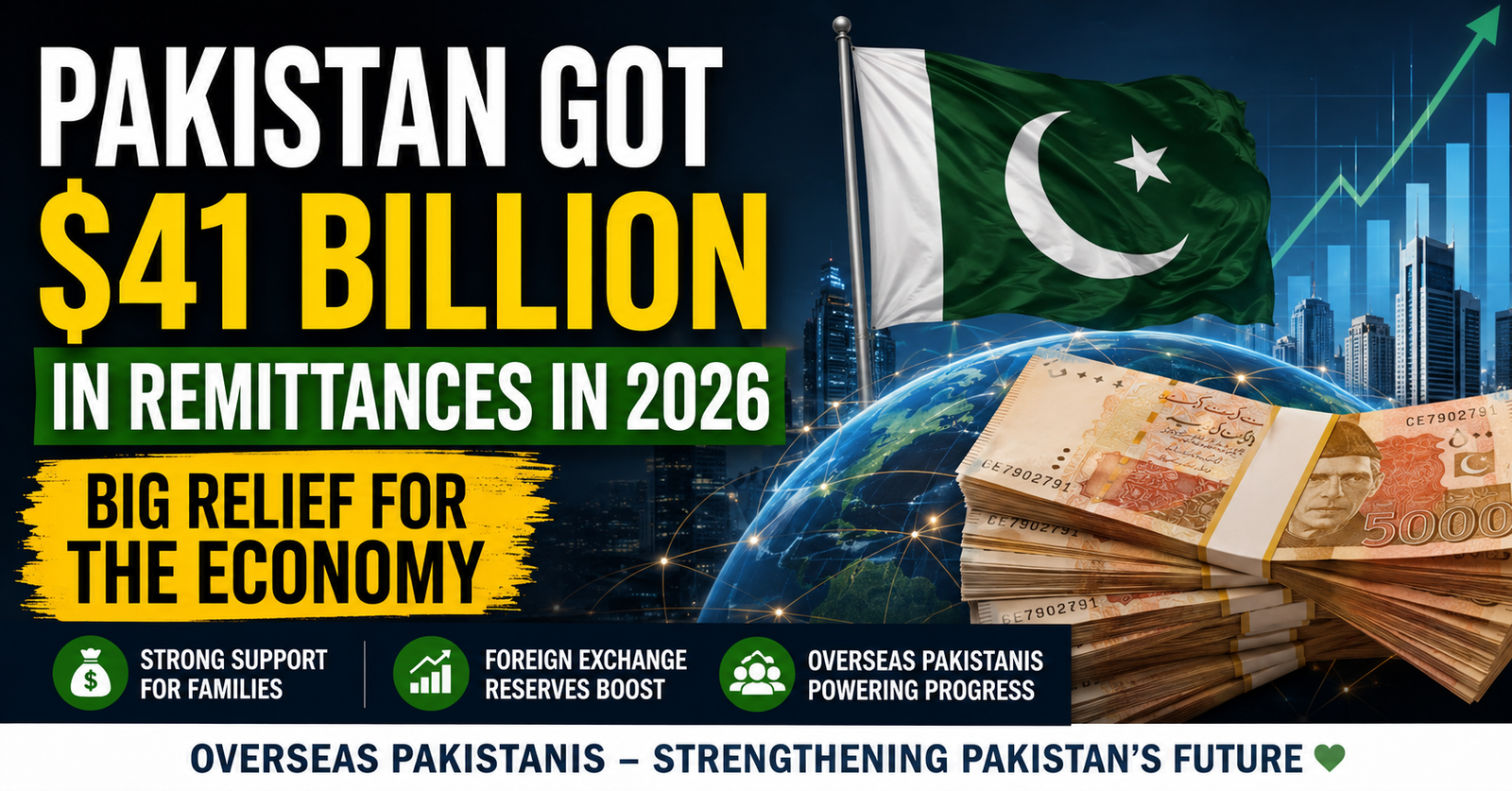
Pakistan Got $38 Billion in Remittances in 2026: Big Relief for the Economy
Overseas Pakistanis have once again come through for the country.
In the financial year 2026, Pakistan received $38 billion in remittances. That’s one of the highest numbers we’ve ever seen.
The State Bank shared the data this week. Most of the money came from Gulf countries, the US, UK, and Europe.
Saudi Arabia and UAE sent the most. Together they made up more than half of the total.
The US and UK also sent record amounts. A lot of Pakistanis working in hospitals, IT companies, and shops sent extra money this year.
So why did the numbers go up so much?
A few reasons stand out.
First, the exchange rate stayed stable. People felt safe sending money through banks instead of other ways.
Second, sending money got easier. The State Bank rolled out new digital options. Now it takes minutes, not days.
Third, life back home got expensive. With inflation and floods, families abroad sent more to help with food, rent, and school costs.
The timing really helped Pakistan.
Our foreign reserves are under pressure. Imports are high. The trade gap is still there.
But this $38 billion helped keep the rupee from falling too much. It also helped pay for oil and medicines.
Experts call remittances a “safety net”. When exports drop, this money still comes in.
And the best part? Unlike loans, we don’t have to pay it back.
So who is actually using this money?
Mostly families in Punjab, KPK, and Sindh.
In villages it covers daily expenses. In cities it goes to rent, education, and small businesses.
A man in Peshawar told a local paper, “Without this money, we wouldn’t have made it this year.”
The government is pushing people to use banks instead of hundi. And it’s working. Bank transfers went up by 18% this year.
What did they do?
They removed fees on small transfers. They tied up with exchange companies in the Gulf. And they ran ads telling people to send money legally.
The PM even posted a video thanking overseas Pakistanis. He called them “the backbone of our economy” and promised to make things easier for them.
But it’s not all perfect.
Some economists worry we’re relying too much on this money. They say we also need to grow exports and create jobs here.
If Gulf countries slow down hiring, remittances could drop next year. So we can’t depend on this forever.
Still, for 2026 the news is good.
$38 billion means about $3.1 billion every month. That’s more than we make from textiles in some months.
It also means millions of homes didn’t go hungry this year.
The State Bank thinks the numbers will stay strong. Eid, school admissions, and winter always push remittances up.
Young Pakistanis abroad are using new apps now. Money reaches home in minutes.
In Dubai, London, and New York, Pakistani communities also raised funds for flood victims in G-B and Punjab.
So this money isn’t just for families. It’s helping during disasters too.
Compared to last year, remittances are up by almost 12%. That shows people trust the banking system more now.
Local businesses feel it too. More money in homes means more spending in markets. From grocery stores to mobile shops.
Now the government has to use this breathing room wisely. Control inflation. Create jobs.
If people can find good work here, fewer will need to go abroad. But until that happens, remittances matter a lot.
Overseas Pakistanis say they’ll keep helping. Many said they don’t just send money out of duty. They do it out of love.
Final Thoughts
$38 billion is a big number. But behind it are real stories.
It’s a mother paying school fees. A father buying medicine. A family rebuilding after floods.
This year was tough. But Pakistanis abroad didn’t forget home.
Yes, we need to fix exports and build industry. But right now, these remittances are keeping millions of families afloat.
To everyone working abroad: thank you. You’re carrying Pakistan on your shoulders.
If the government keeps making it easy and cheap to send money, we might see even bigger numbers next year.